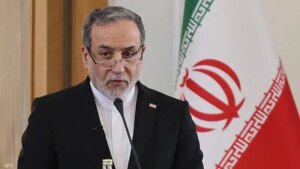
Inside Iran, there is an escalating conflict over communication channels with the United States, against the backdrop of the participation of an Iranian representative in the United Nations General Assembly hall during US President Donald Trump’s speech. This participation turned into a new pretext for an attack led by the conservative movement against Foreign Minister Abbas Araghchi, amid increasing parliamentary threats to dismiss him.
In this context, the Israeli newspaper “Maariv” quoted a member of the Iranian Parliament and Vice Chairman of the Article 90 Oversight Committee in the Shura Council, Hossein Ali Haji Delighani, as threatening to take advantage of all oversight tools, including interrogating Araghchi and dismissing him. The representative continues to collect the necessary signatures and documents to advance this path, describing the Iranian representative’s presence in the hall during Trump’s speech as “shameful.”
This escalation came as a result of threats made by Trump during his speech in Tarman, warning that the absence of an agreement could expose the Islamic Republic to destruction, and called on the international community to join the campaign of economic pressure against Tehran. Despite this sharp tone, Trump revealed that his envoys, Steve Witkopf and Jared Kushner, held a meeting that lasted about three hours with an Iranian delegation that included Araghchi on the sidelines of the General Assembly meetings, describing the meeting as “very good and fruitful,” and announcing planning for a round of discussions soon, at a time when no official Iranian authorities had confirmed the meeting would be held publicly when the “Maariv” report was published.
These developments aroused the ire of conservative movements, which launched a widespread attack on the government of President Masoud Pezeshkian and its Minister of Foreign Affairs, despite previous statements by a spokesman for the Revolutionary Guard in which he acknowledged that negotiation might be “another face of war” imposed by national interests.
The threat directed at Araqchi is not spur of the moment; Haji Delighani had previously announced in early August that he had collected documents in preparation for interrogating the minister, strongly criticizing the performance of the Ministry of Foreign Affairs and describing it as “backward,” in addition to his rejection of any contacts with Washington or arrangements related to the Strait of Hormuz without the approval of Parliament.
This escalation highlights the deep gap within the corridors of the Iranian regime regarding ways to deal with the ongoing confrontation with Washington. While President Pezeshkian’s team and the Ministry of Foreign Affairs seek to keep diplomatic channels open and discussed in New York the conditions for resuming negotiations and the Strait of Hormuz issue, the conservative movement in Parliament and the political establishment warn against Washington’s exploitation of negotiations as a tool to increase pressure.
Thus, the negotiating battle with Washington exceeds the boundaries of the external conflict and turns into a raging internal crisis in Tehran, which may reach its peak if the New York contacts develop into official negotiations, which puts Araqchi before a double and delicate test between his diplomatic success abroad and the battle to maintain his position at home.