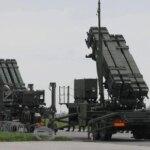
Germany is seeking American approval to allow the manufacture of advanced “Patriot PAC-3” interceptor missiles on its territory, in a new indication of the severe shortage that the pressures are putting on Western air defense stocks, specifically in light of the increasing difficulties that Ukraine is facing in securing the quantities required to confront Russian attacks, in parallel with the expanding global demand for these systems.
In this context, German Defense Minister Boris Pistorius revealed, in statements carried by a news agency report published by the Israeli newspaper “Maariv”, that Berlin is holding discussions with Washington for the green light to produce “PAC-3” missiles in Europe and Germany to increase global production capacity. Pistorius explained that he raised the issue during his recent visit to Washington and his meeting with US Secretary of Defense Pete Hegseth, stressing his country’s readiness to contribute to meeting the huge demand by establishing local production lines.
Germany and the United States have previously signed a declaration of intent to expand defense cooperation, including joint development and production with American licenses, as part of NATO’s efforts to reduce bottlenecks in supply chains. Pistorius pointed out that the initial understanding includes “PAC-3” missiles, but the transition to actual production requires additional agreements related to intellectual property rights and approvals from the US Department of Defense, the White House, and the manufacturer.
Lockheed Martin produces PAC-3 MSE missiles capable of intercepting ballistic missiles, which are an essential element of Ukrainian defense. While the company is working to increase its production locally in America, the European company “Matra Bavaria” (MBDA) is preparing to expand the production of “Patriot” missiles from the “PAC-2” family at its factory in Bavaria (including the GEM-T version), while Washington has not yet granted approval to produce “PAC-3” in Europe.
The crisis is clearly evident in Ukraine, which is facing intense waves of Russian attacks with missiles and drones, as Ukrainian President Volodymyr Zelensky had previously asked the United States for at least 300 “Patriot” interceptor missiles to protect infrastructure, warning that his country’s stock was about to run out. Zelensky explained, after his meeting with US President Donald Trump on the sidelines of the United Nations General Assembly meetings, that he repeated the request to produce “PAC-2” and “PAC-3” missiles inside Ukraine, pointing out the willingness of American companies to discuss the matter, amid estimates that building a new manufacturing line may take between a year and a year and a half after obtaining approval, and perhaps longer to reach large-scale production.
In parallel, Berlin is moving to enhance its long-range offensive capabilities through cooperation with Washington in the field of winged “Tomahawk” missiles. It has submitted a request to obtain the American “Typhoon” systems capable of launching these missiles to carry out long-range precision strikes – whose targets may reach Russia if they are deployed in Germany – in addition to examining the participation of German industry in the production of related components, although these plans require additional approvals and arrangements in light of the presence of a long waiting list for the long-range American systems.
The Patriot missile crisis reveals a broader problem represented by the pace of demand exceeding the production capacity of Western factories, amid heavy Ukrainian consumption and European countries seeking to enhance their own stocks amid the deteriorating security environment. From this standpoint, Berlin does not view the manufacture of “PAC-3” locally as just a commercial deal, but rather as part of a strategic European trend to expand the defense production base and reduce dependence on American factories, in a race in which the speed of production has become equal in importance to the possession of the systems themselves.