The European Bank for Reconstruction and Development warned today, Thursday, of a noticeable slowdown in economic growth in several emerging economies, indicating that the repercussions of wars and conflicts are casting a heavy shadow on countries, most notably Iraq, Lebanon and Ukraine.
In its report on the regional economic outlook, the bank explained that economic activity is under intense pressure due to rising energy prices and borrowing costs, as well as drought waves in Europe and the continued closure of the Strait of Hormuz. As a result of these factors, the bank lowered its growth forecast for the 41 economies it covers to 2.5% for the current year, down by 0.6 percentage points from last June’s estimate, in the second successive reduction of its forecast.
For her part, the bank’s chief economist, Beata Javorczyk, said: “What raises concern is the presence of multiple pressure points, starting from diesel and the cost of wheat to the cost of borrowing… The pressures are increasing, and there are great risks that warn of a decline in our expectations.”
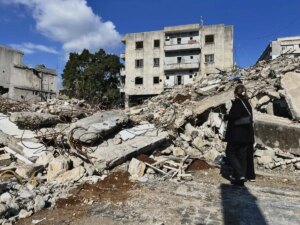
In detail, the economies of Iraq and Lebanon recorded the largest decline in expectations. The bank expects the Iraqi economy to contract by 12% during the current year as a result of the impact of the closure of the Strait of Hormuz on oil exports, as well as a contraction of the Lebanese economy by 5% in light of the repercussions of the ongoing conflict with Israel on economic activity. The forecast reductions also included the Ukrainian economy due to the intensification of Russian attacks, and the Turkish economy due to continuing inflationary pressures that imposed stricter financing conditions.
On the inflationary level, the report indicated that price pressures were less severe than previous fears, as average inflation in the bank’s operating areas stabilized at about 6%, with about a quarter contributed by the energy sector.
On the other hand, global wheat prices have witnessed a 30% jump since last February. Yavorchik explained that the attacks in the Black Sea region caused Ukrainian exports to decline to their lowest levels since April 2022.
These developments are likely to cause Ukraine’s exports of wheat, seed oil and minerals to decline by about $5.5 billion this year, representing 2.5% of its gross domestic product, in conjunction with a decline in alternative export routes as a result of lower water levels in the Danube River and continued Russian attacks on railway infrastructure.
The sharp rise in wheat prices poses a direct threat to food importing economies, especially Egypt, which relies heavily on subsidies for bread and grain products, at a time when Russia and Ukraine together account for about a quarter of global wheat exports.