An Israeli report prepared by researcher Zoe Levornick for the Alma Center concluded that Hezbollah’s power is not measured only by weapons and political influence, but rather extends to include an integrated media and institutional system that plays a pivotal role in maintaining the cohesion of its popular base despite the military strikes that targeted its leadership and its regions. The report explained that this system constantly seeks to formulate concepts of victory and defeat, and to link losses to the continuation of the path of “resistance” and defense of weapons.
The report indicated that the party’s network, which includes political discourse, the media, social media accounts, posters, ceremonies, and social institutions, operates within a connected system that relies on the repetition of symbols and stories of sacrifice. This format aims to transform political support into a bond of collective loyalty to former Secretary-General Hassan Nasrallah and the dead, which narrows the space for internal criticism within the party environment.
The report highlighted the flexibility of the party’s media discourse and its adaptation to developments on the ground. Before the war, it focused on deterrence, imposing equations, and starting fighting under the titles “Support Front” and “On the Road to Jerusalem,” while after the assassination of the leaders, the focus shifted to fulfilling the covenant and continuing the fighting. With the ceasefire phase, return to villages and reconstruction were included within the definition of victory, making steadfastness an achievement and organization an alternative to decisive military advantage.
Regarding commemoration, the report indicated that funerals, wills, and posters transform individual losses into a collective narrative that obliges the living to continue the approach and deepen the belonging of the younger generations. This narrative is integrated with the reconstruction efforts and compensation institutions, which focus on the party’s presence alongside those affected, to move the discussion from the responsibility of opening the front to field and social support.
On the political level, these messages are being used to serve the arms battle by linking loyalty to the previous leadership to the continuation of resistance. The report also highlights a discrepancy in the concept of sovereignty between restricting weapons to state institutions, and the party’s vision based on the use of force against Israel outside the scope of the state. In the internal context, opponents of the party’s weapons or those calling for a settlement with Israel are confronted with rhetoric that labels them as serving the foreign agenda, which reduces the debate about the feasibility of its policies.
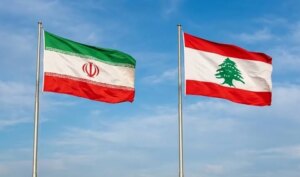
The report indicated the diversity of the party’s speeches according to the target audience. The religious discourse associated with Karbala is used for the Shiite audience, and the discourse of defending sovereignty for the general Lebanese audience, while messages of deterrence and attrition are directed at Israel, and weapons are presented internationally as a local matter, which allows the party to combine its identity within the “Iranian axis” and present itself as a Lebanese force.
The report is divided into three parts: The first is concerned with drawing a map of the media system and its development since October 2023, the second tracks the development of the party’s discourse between the years 2021 and 2026, while the third reviews the roles of its various media outlets, concluding that the party’s ability to direct interpretations of events to its audience remains an essential pillar of its continuity in the face of military and political challenges.