October 24, 2026

In an unprecedented step that reflects the efforts of London and Paris to enhance coordination between their nuclear arsenals, British fighter jets participated, for the first time, in an exercise simulating the implementation of a French nuclear strike, which opens the door to serious questions about the possibility of building a European nuclear deterrent more independent of the United States.
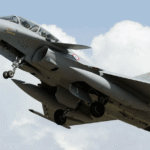
On Friday, the British and French Ministries of Defense announced that the British Royal Air Force’s “Typhoon” fighters accompanied the French “Rafale” fighters during an exercise called “Rummy,” which took place on October 20 and 21 over the Mediterranean. The planes took off from Saint-Dizier Air Base in northeastern France, where French fighters carried out a hypothetical nuclear strike mission, while British planes escorted and protected them, without using actual nuclear weapons. Despite the absence of British participation in carrying or launching nuclear weapons, this maneuver represents an important transition from political coordination to direct operational cooperation in strategic deterrence tasks.
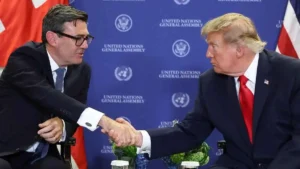
This maneuver comes in implementation of the Northwood Declaration, which was signed by French President Emmanuel Macron and British Prime Minister Keir Starmer in July 2025, which stipulated strengthening coordination between the nuclear capabilities of the two countries, while each of them maintained the independence of its decisions. The agreement resulted in the establishment of a joint nuclear steering group to coordinate policies, capabilities and operations, with the conviction that any extremely serious threat to Europe’s security would require a response from the two countries. After British officials attended a similar French training as observers last December, participation this week evolved into actual air escort. In this context, French Minister of the Armed Forces, Catherine Vautran, stressed that having two independent nuclear forces does not prevent coordination between them, considering that this cooperation enhances their contribution to the security of Europe and NATO.
This rapprochement comes at a time when European fears of Russian threats are increasing, especially with the continuing war in Ukraine and the escalation of rhetoric regarding the possibility of using nuclear weapons, in addition to questions about the future of American security commitments, which are pushing European capitals to search for defensive means that do not depend entirely on Washington. France and Britain gain special importance as they are the only two European countries that possess nuclear weapons after Britain’s exit from the European Union, and despite their differences in operational capabilities. Britain relies on submarines equipped with Trident ballistic missiles, while France has a naval and air deterrence force through Rafale fighters. However, this difference allows for integration that enables British fighters to provide air protection without engaging in a nuclear weapon launch system.
Despite the political and military importance of the exercise, it does not mean the birth of a unified European nuclear force or the transfer of powers to use nuclear weapons to a joint command. The decision to use the French arsenal remains exclusively with the French President, while the British government retains national authority over its weapons. The new cooperation is not a declared alternative to the American nuclear deterrent within NATO, but rather London and Paris are seeking to provide it as additional support for the alliance’s capabilities. A fundamental dilemma emerges here: the extent to which Britain and France are able to provide reliable nuclear guarantees to the rest of European countries without establishing a joint decision-making mechanism, in light of the difference in strategic interests and the dependence of many European countries on American capabilities such as intelligence, air defense and early warning systems.
The French move is not limited to Britain alone; This year, Paris proposed a vision for expanding the participation of European allies in deterrence activities, including training and traditional military cooperation related to the protection of nuclear forces. Germany participated in this path through joint air activities with French and German fighters during the summer. However, the transition from joint exercises to an independent European deterrence system requires broad political consensus, identifying the countries covered by nuclear guarantees, coordination mechanisms in crises, and the limits of responsibility for any decision to use, so that the British-French maneuver remains a practical step towards strengthening the European dimension of nuclear deterrence without necessarily meaning complete independence from the United States.