October 23, 2026

The Chairman of the Board of Directors of the Port of Beirut and its General Manager, Marwan Al-Nafi, announced an ambitious plan to expand the port that aims to raise its capacity from about 1.2 million to 3 million TEU annually, which will place it, according to estimates, among the seven largest ports on the Mediterranean Sea.
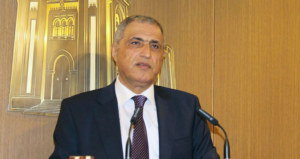
This came during an expanded meeting hosted by economic bodies, headed by former Minister Mohamed Choucair, at the headquarters of the Beirut and Mount Lebanon Chamber, and was devoted to discussing the port’s conditions, development projects, and ways to facilitate the movement of trade, import and export.
Al-Nafi confirmed that the Port of Beirut accounts for about 80% of the movement of Lebanese exports and imports, pointing out that its strategic geographical location qualifies it to serve the markets of Lebanon, Syria, Jordan, and Iraq, which include about 100 million people. He explained that work is underway in cooperation with the Ministry of Public Works and Transport and with government support, to prepare the port to play a vital role in the reconstruction of Syria, and to consolidate Lebanon’s role as a regional logistics center.
In the same context, Al-Nafy revealed a strategic project to establish a dry dock in the Bekaa region, to be linked to the port of Beirut via a railway or truck network, with the aim of using it as a center for storing goods and redistributing them towards Syria, Iraq, Jordan and the Gulf countries, which will contribute to shortening shipping times. He also announced that Lebanon has become a founding member of the EMAC Ports Club, in a move aimed at strengthening the country’s presence within the global trade network.
At the level of administrative and operational modernization, Al-Nafy reviewed a package of measures that included adopting electronic payment, installing a modern container inspection device, improving operational systems, and preparing to launch a tender for the Port Community System (PCS), as well as allowing goods to be taken out at night to speed up the pace of commercial operations.
For his part, Muhammad Shuqair reaffirmed the full support of economic bodies for port development projects, stressing the importance of enhancing coordination and cooperation between the port administration and various sectors, including merchants, industrialists, importers and exporters, in a way that contributes to accelerating procedures and reducing operational burdens.
The meeting concluded with an agreement to organize a field visit to the Port of Beirut to closely examine the implemented projects and follow up on joint files.