October 5, 2026

The Israeli “Alma” Center shed light on the activity of the “Independents for Lebanon” framework, considering, in an analytical reading prepared by researcher Zoe Levornick, that the movements of this framework contribute to delivering the “resistance” discourse affiliated with “Hezbollah” to the Christian community, which is a purely Israeli narrative that is not adopted by objective coverage.
The Israeli reading focused on the “Christian Conference to Support the South,” which was organized by the meeting in Beirut on September 26, 2026, where the issues of rebuilding the south, the return of its residents, and confronting Israel were raised as national files that cross sectarian divisions. The center’s article stressed that the conference was not an official event for the Maronite Church, although religious and political figures participated in it.
Bishop Elias Nassar, representing the Patriarchal edifice in Bkerke, Deputy Speaker of the House of Representatives, Elias Bou Saab, former Deputy Speaker of the House, Elie Ferzli, and Vera Yammine, representative of the “Marada” movement, participated in the conference, noting that participation in the event does not necessarily mean membership in the meeting.
It is noteworthy that the “Independents for Lebanon” framework was officially announced in Bkerke in May 2023, presenting itself as an elite Christian political voice independent of the major parties, calling for dialogue and rejecting the monopoly of Christian decision-making. Its launch was associated with prominent names that included: Abdullah Farhat, Fadi Abboud, George Qordahi, Walid Khoury, Cesar Maalouf, Samer Saadeh, Mario Aoun, Joan Hobeish, Roy Issa Al-Khoury, and Nara George Hawi, noting that these names were mentioned in the media coverage of the founding and do not mean the continuation of everyone’s membership now.
In March 2024, there were conflicting reports about the resignation of some figures in objection to what they described as the meeting’s deviation towards “Hezbollah,” while the secretary of the meeting, Rafi Madayan, denied the disintegration of the framework or a change in its direction, stressing that it was an entity open to the entry and exit of figures.
The Israeli article was based on other events, most notably a meeting that brought together a delegation from the meeting with Naim Qassem in January 2024, during which a “unity of position” was announced on national and regional issues and support for the “Lebanese Resistance,” in addition to a visit by a delegation from the party headed by Mahmoud Qamati to the meeting headquarters in August 2025 to discuss restricting weapons to the state.
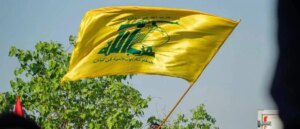
According to Alma’s reading, the importance of the meeting for Hezbollah – in light of the harsh blows it received and the ongoing discussions about confining weapons to the state and its institutions – lies not in its electoral weight, but in providing a Christian cover for the “resistance” discourse, which helps the party justify keeping its weapons outside its exclusive Shiite environment.
The “ALMA” Center concludes that portraying “resistance” as a national necessity contributes to moving the political debate from the legitimacy of the party’s weapons to the timing and conditions of abandoning them. Meanwhile, “Independents for Lebanon” insists on presenting itself as a platform for dialogue and activating the Christian national role.