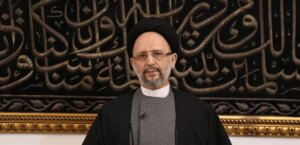
The distinguished Jaafari Mufti, Sheikh Ahmed Qabalan, held the executive authority responsible for the unprecedented social and economic crisis in Lebanon, linking it to security developments in the south, and directing sharp criticism at government policies that he described as increasing pressure on the country.
In the Friday sermon he delivered at the Imam Hussein Mosque in the Burj al-Barajneh area, Sheikh Qabalan described the current situation in Lebanon as representing “the worst social, economic, national, moral and professional bottom,” criticizing what he called policies of impoverishment, disguised taxes, waste, monopoly, and government obligations. He stressed that the dignity of citizens and their right to health care, education, justice and development constitute the basis for the legitimacy of the state.
Regarding the escalation in the south, Qablan accused the government of making choices that would double the pressure on the southern front, criticizing what he described as its role in “security deals and behind the scenes,” and holding it politically responsible for what is happening in that region, in a position that reflects his own political vision.
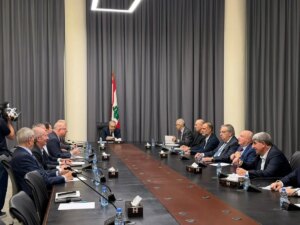
Mufti Qabalan attacked the “Framework Agreement” in harsh terms, considering that it threatens security, national partnership, and civil peace. On the other hand, the Lebanese presidency and government confirm that the path of the agreement aims to consolidate the cessation of hostilities, Israel’s withdrawal from Lebanese territory, and the extension of state authority, in parallel with indirect negotiations on the borders and the prisoner issue, amid government adherence to the negotiating path, support for the Lebanese army, and preventing a security vacuum after the end of UNIFIL’s tasks, while seeking to maintain an international presence under the umbrella of the United Nations.
At the regional level, Sheikh Qabalan called on both the Kingdom of Saudi Arabia and the Islamic Republic of Iran to establish an “Arab-Islamic settlement,” considering that rapprochement between Riyadh and Tehran represents a strategic interest. He also urged Turkey and Pakistan to contribute to shaping a new regional environment.