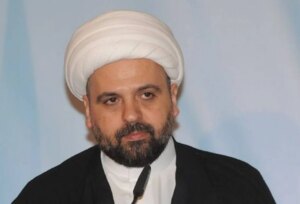
In a position that balances keeping negotiation channels open and escalating the tone towards the official authority, member of the “Loyalty to the Resistance” bloc, MP Hassan Fadlallah, confirmed that Hezbollah and the Amal Movement do not reject the political solution or indirect negotiation, provided that it leads to Israel’s withdrawal, the return of the people of the south, and the start of the reconstruction process, rejecting in return what he described as the policy of “submission and surrender.”
Fadlallah’s statements came during a memorial celebration held by the party for the educator and freed prisoner Rafiq Ahmed Sharara in the Imam al-Kadhim Complex in the Madi neighborhood, in the presence of figures, activists, families of martyrs, and a crowd of residents.
Fadlallah stressed that the highest priority for the current stage is to restore the lands, protect the people, and secure the return of the displaced to their southern villages and towns and begin their reconstruction, stressing his team’s support for “rights-based diplomacy” and indirect negotiation whenever it achieves these goals.
In the context of his attack on the government’s performance, he pointed out that Hezbollah and the Amal Movement “did not close the doors” to a political solution, but he saw that since the cessation of hostilities agreement on November 27, 2024, no solution has been proposed that would guarantee the cessation of Israeli operations and the return of residents to their homes. He also criticized the “Framework Agreement,” considering that it links the Israeli withdrawal to the party’s weapons file and practically enshrines the continued Israeli presence in the south.
On the other hand, the Lebanese government officially maintains that the current negotiating framework aims to achieve complete Israeli withdrawal from Lebanese territory and extend state authority over it. It is noteworthy that the cessation of hostilities understanding, which began its implementation on November 27, 2024, stipulated a phased Israeli withdrawal to the south of the Blue Line in parallel with the deployment of the Lebanese army, in addition to the implementation of International Resolution 1701 and its requirement of confining weapons to the official powers.
Militarily, Fadlallah renewed the party’s adherence to the option of confrontation, highlighting the confrontations in the Ali al-Taher area, where fighters held out for about three months under bombardment, and stressing that the loss of a site or the incursion of Israeli forces does not mean abandoning this option.
On the external level, Fadlallah touched on the Iranian role, stressing Tehran’s support for Lebanon and the party, and referring to the recent New York meetings, before calling on the Lebanese authority to stop what he described as a “hostile policy” towards the party and its incubating environment.
As for the government issue, Fadlallah clarified that his bloc did not withhold confidence from the government despite its sharp criticism of its performance, attributing the continued participation of Hezbollah and the Amal Movement in it to “national and political necessities related to partnership,” stressing that this does not translate into support for the government’s policies or a positive evaluation of its performance.
Representative Fadlallah’s positions come amid an ongoing internal division regarding the approach to the southern file, the party’s weapons, and the negotiating path, at a time when the government insists on moving forward with the negotiation path in order to achieve Israeli withdrawal, ensure the safe return of the displaced, and restore the state’s authority over its entire territory.