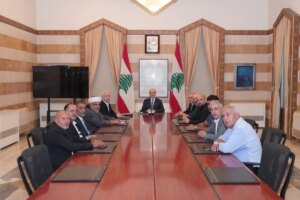
The “Loyalty to the Resistance” bloc held its regular meeting in the presence of all its members, where it reviewed a number of parliamentary, local and regional files, and at its conclusion it issued a statement that addressed internal affairs and its political positions regarding developments in Palestine, Lebanon and Iran.
The bloc began its statement by recalling its late leaders on the second anniversary of the assassination of the former Secretary-General of Hezbollah, Mr. Hassan Nasrallah, and the Secretary-General, Mr. Hashem Safi al-Din, along with a number of leaders and “founding secretaries.” It also touched on the anniversary of the pager bombings, noting that the attack targeted thousands of fighters and civilians, including women and children, in their homes and workplaces.
The bloc stressed that these events embody the resistance incubator’s adherence to its approach and its defensive role in Lebanon, despite the magnitude of the sacrifices and pressures. It renewed its pledge to the martyrs, the wounded, the prisoners and their families, declaring its support for the leadership of Hezbollah and its Secretary-General Sheikh Naim Qassem, and its commitment to the legacy and goals of the martyrs.
Regarding the local issue, the bloc stopped at the parliamentary accountability session of the government that was held last week, recording what it described as ministerial failures to provide clear answers regarding the files of depositors’ funds, electricity production, high prices and the high cost of living, in addition to the communications and transportation sectors. The bloc criticized the government’s performance regarding the Israeli attacks, considering that it failed to issue clear instructions to the army to defend the country, and to assign the Ministry of Foreign Affairs to submit official complaints to the United Nations and the Security Council.
The bloc accused the executive authority of exploiting the continued Israeli attacks to cover its deficit, avoiding direct reference to Israel, and trying to hold the resistance responsible for the government’s failure. She pointed out that the resistance adhered to a ceasefire for 15 months, while Israel continued its acts of killing, destruction, bulldozing and bombing homes, neighborhoods, institutions and hospitals, without any serious government action.
At the regional level, the bloc condemned the ongoing Israeli military operations in the Gaza Strip and the West Bank, and the settlers’ attacks on Al-Aqsa Mosque, criticizing what it described as “Arab silence and international complicity.” At the same time, she expressed her absolute confidence in the Palestinian people, their factions, and their ability to withstand.
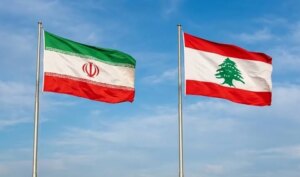
Regarding the Iranian issue, the bloc praised the steadfastness of the Iranian people in the face of the escalation of Western sanctions and blockade, declaring its confidence in the Iranian leadership, state institutions and its armed forces, and considered that Tehran’s positions constitute a major pillar of the aspirations of the peoples of the region towards freedom and independence.