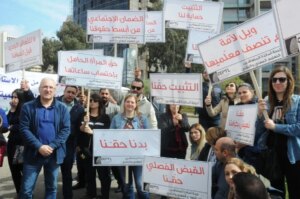
Lebanon is witnessing a noticeable increase in union and labor movements, under the weight of the economic repercussions of the regional war and the high cost of living, amid serious warnings that the absence of government solutions may spark a widespread escalation that threatens the regularity of work in public administrations and the movement of the country. The government is facing increasing pressure from employees, drivers, teachers, retired military personnel, and other affected groups, at a time when economic estimates indicate worsening inflation and a decline in purchasing power, in addition to overwhelming popular rejection of any additional tax or financial burdens.
In the land transport sector, circles are awaiting a meeting of transport federations and syndicates to discuss the repercussions of the rise in fuel prices and the non-implementation of previous agreements with the government. The head of the Land Transport Union, Bassam Tlais, confirmed in statements to the “Lebanon Debate” website that the public driver is one of those most affected, as his car is his only source of livelihood. He criticized the government’s mechanism for dealing with fuel prices and merely keeping pace with international prices without proactive policies, and wondering how to calculate the price differences on the quantities stored by companies. Tlais recalled the agreement last February to support drivers to stabilize transportation tariffs and protect the sector, regarding which an official decision was issued by the Council of Ministers without the drivers’ dues being paid or its procedures being fully implemented. He announced that the option of escalation is strongly on the table – in parallel with spontaneous movements by some drivers – stressing his commitment to the decisions of the union bodies, and holding the government responsible while calling for not turning the crisis into a confrontation between drivers and citizens.
In parallel, the General Labor Union gave the government until next Saturday to respond to its demand to raise the minimum wage, adjust the transportation allowance, control prices, and resolve urgent livelihood issues. Union President Dr. Beshara Al-Asmar explained that the next stage may witness coordinated escalation steps with union associations, retired military personnel, teachers, and affected sectors to put pressure towards responding to their demands.
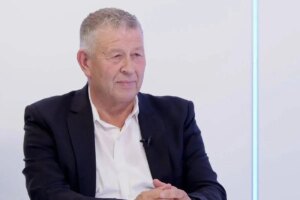
As for the public administration level, the head of the Public Administration Employees Association, Raed Hamadeh, confirmed in an interview with “Lebanon Debate” that Friday was a fixed date for the strike, while freedom of discretion is left to employees on Wednesday and Thursday according to the nature of the work, especially in departments that deal with urgent humanitarian cases. Hamada described the move as a response to the state’s abandonment of its responsibilities, stressing that the association “will take its role” in defending workers’ rights. He pointed out that there is permanent coordination and integration of steps with the President of the General Labor Union, Dr. Bechara Al-Asmar, pointing out that the association was one of the first parties to take action and is continuing its struggle without stopping. Hamada concluded by confirming that the steps are evaluated weekly, while the option of a comprehensive closure remains on the table, criticizing the absence of a clear government plan to address the crisis, and stressing the need for the treatment of employees’ conditions to be based on the principle of justice and equality, not allocating categories over others.