The anticipated confrontation between the Irish and Israeli national teams in the European Nations League goes beyond purely sporting dimensions, as the Irish national team and the Football Association found themselves at the heart of an escalating political controversy due to the repercussions of the Gaza war.
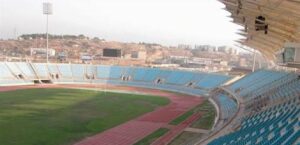
The two teams will play two consecutive confrontations within one week on neutral ground amid strict security measures and crowd restrictions. The first “home” match for Israel will be held in the Hungarian city of Debrecen on September 27, without tickets allocated to Irish fans. On the other hand, the second match classified as “home” for Ireland will be played behind closed doors in the Serbian city of Bačka Topola on October 4, instead of the capital, Dublin.
Sports and popular pressures
The objections extended outside the stands, after 163 Irish athletes signed an open letter demanding that the national team players boycott the two matches and not participate in them. The list of signatories included prominent figures from various sports, including runner Ciara Magian and former Irish national team player Louise Quinn. Although the signatories acknowledged that the players were placed in a complicated situation due to the decisions of the Irish Federation and the European Football Association (UEFA), they called on them to take a decisive stance by refusing to play. At the same time, protesters organized a protest in front of the Irish team’s hotel in Dublin to demand a boycott in protest against Israeli military operations in the Gaza Strip.
It is noteworthy that the members of the Irish Federation had voted overwhelmingly last November to ask the Board of Directors to seek to suspend the membership of the Israeli Federation and prevent it from participating in European competitions, a request that was rejected by UEFA. The Irish Federation also requested to avoid placing its national team and Israel in one group in future draws, to which UEFA responded that dismissal decisions are studied individually and depend mainly on the security risks resulting from direct conflicts between countries.
The position of the national team and the federation
For his part, Irish national team coach, Heimir Hallgrimsson, acknowledged that the players were not comfortable playing the two matches. He explained that he held individual discussions with members of the list to listen to their opinions, and in the end it was agreed to go into the meetings to represent the team and preserve its unity.
However, the coach’s statements sparked an intense debate after he said that his team would play “against genocide,” in reference to Israeli military operations in Gaza. The Israeli Football Association responded by accusing Hallgrimsson of ignorance and hypocrisy, stressing that the team is focusing exclusively on its sports preparations, at a time when Israel rejects the accusations against it of committing genocide and confirms that its operations target the Hamas movement.
Regarding the reasons for Ireland’s reluctance to boycott the matches despite its position calling for suspending Israel’s participation, the decision is due to the Irish Federation’s fear of being subjected to sporting and financial sanctions, and the calculation of points for the two matches in favor of Israel in the event of withdrawal, in addition to fears of the impact of any decision to refuse to play on Ireland’s opportunity to participate in hosting the 2028 European Championship.
Given these facts, the two confrontations will be held far from the strongholds of the two elected teams and under security restrictions, but they will not be isolated from the political reality, as the protests, open letters, and heated statements have turned into a real test of the extent of the ability of sports institutions to distance the game from war conflicts.