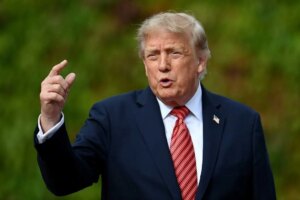
With the American midterm elections approaching, the Washington Post revealed a remarkable shift in US President Donald Trump’s position regarding the electoral scene, indicating that he acknowledged in closed conversations with his advisors that his decisions related to the war with Iran contributed to complicating the political situation of his Republican Party.
In a report published today, Saturday, the newspaper relied on four informed sources who reported that Trump had become more aware of the difficult circumstances surrounding the Republicans, and had begun to listen more carefully to the results of opinion polls – despite their discouraging indicators – which prompted him to intensify his involvement in the electoral battle with the aim of limiting potential losses.
According to the same sources, Trump pledged to actively participate in campaigns to support Republican Party candidates, as well as to pump additional funds into competitive electoral races, in an attempt to change the balance of the electoral balance, which faces many challenges.
Trump’s advisors explained that they have become more frank with him in conveying the electoral reality, noting that the president has become more receptive to their warnings and assessments, although this does not always reflect on his general mood.
Views vary within Trump’s inner circle. Two sources confirmed that he feels that his decisions weakened his popularity and acknowledged his implicit responsibility for the complexity of the scene, while another person in constant contact with him reported that Trump does not see himself directly responsible, and considers his personal absence from the ballot to be the most prominent challenge facing Republicans.
While Trump has shown excessive public confidence over the past months, justifying the decline of the traditionally ruling party in the midterm elections, and stressing that electoral considerations will not control his decisions regarding Iran, these leaks come at a very sensitive time in which the issues of war, the rise in oil prices, and the cost of living overlap with the assessment of the popularity of the current administration.
It is noteworthy that Trump had publicly acknowledged that the confrontation with Iran had contributed to the rise in fuel prices, but he defended those decisions, considering that their cost remained justified in view of the goals of American policy towards Tehran.