An unprecedented wave of security alert is sweeping Europe amid mounting fears of the expanding scope of the Russian-Ukrainian war, and the possibility that Moscow will resort to targeting member states of the North Atlantic Treaty Organization (NATO) with missiles or drones, in response to its support for Kiev.
A report published by Politico revealed warnings issued by European officials about the possibility of an expected Russian escalation in the coming months. In this context, Polish Prime Minister Donald Tusk suggested that a possible attack would occur soon, while French President Emmanuel Macron confirmed that these warnings were “based on solid foundations,” announcing a new plan to protect infrastructure in France. For his part, Dutch Prime Minister Rob Yetten stressed the need to deal very seriously with his Polish counterpart’s statements, and to show readiness to respond when needed.
On the field and precautionary levels, authorities in Germany began preparing hospitals in anticipation of any possible military confrontation, while Lithuania updated its evacuation plans. In parallel, NATO forces, including German and Swedish units, conducted military exercises on the Baltic Sea island of Gotland, while Belarusian forces carried out large-scale exercises near the Lithuanian border.
In Finland, which shares a land border with Russia, the authorities raised the alert level, and Finnish President Alexander Stubb called on citizens to “prepare psychologically” for the possibility of their country being exposed to a possible Russian attack with drones.
On the other hand, Moscow has escalated its military tone in conjunction with the upcoming Russian parliamentary elections, during which the ruling “United Russia” party is expected to maintain its influence. Russian Foreign Minister Sergei Lavrov warned that Europe would face an all-out war if NATO allies tried to attack Moscow. A senior European security official was quoted as saying that Russia has intensified its activities, stressing the need for vigilance and closely monitoring the situation as part of a broader trend.
In terms of assessing threats, US intelligence reports over the past weeks indicated the possibility of Moscow planning a limited attack against NATO member states. It was also reported that the head of the US Central Intelligence Agency warned Russian officials, during his visit to Moscow at the end of last month, of the consequences of escalating the confrontation with NATO allies, specifically the countries of Estonia, Latvia and Lithuania.
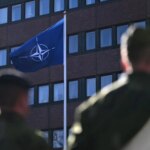
Despite these warnings, it remains unclear whether they are based on new intelligence; Two NATO diplomats confirmed that member states had not received official briefings indicating intelligence developments, noting that NATO had not changed its official assessments of the threat level. One of the diplomats explained: “We do not see an immediate threat of an attack at this stage, but we cannot rely on reassurance, and we must ensure that NATO remains strong in the coming years.”
Between evacuation measures, preparing hospitals, and raising military readiness, the current European movements reflect a growing conviction that the risk of expanding war is no longer just a theoretical scenario.