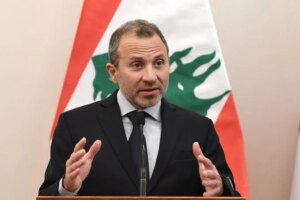
“RED TV”
The Chairman of the Board of Directors of the National Social Security Fund, Dr. Bishara Al-Asmar said that the next stage will witness work on more than one track to redevelop security services and enhance its offerings, from restoring the value of its funds in banks, to expanding the range of its beneficiaries, and putting the retirement and social protection law into effect, in addition to accelerating the process of mechanization and facilitating citizens’ transactions.
During an interview on the “THE HIGHLIGHT” program on RED TV, Al-Asmar stressed that talking about services in Lebanon must be comprehensive, including electricity, water, environment, waste, and social security, considering that all services need a comprehensive review aimed at improving and developing them.
He pointed out that the presence of the President of the General Labor Union at the head of the National Social Security Fund constitutes a push forward for the Fund, pointing out that the President of the Union is concerned with the affairs of a wide segment of citizens and workers, and that his presence in this position would enhance interest in the issues and rights of the working class.
Al-Asmar said: “I reached the presidency of the security thanks to my affiliation with the General Labor Union, and I will call for holding elections in the union within the legal deadlines,” stressing at the same time that his office will be open to all reviews, and that he will seek to listen to various groups with the aim of improving applications and developing security services.
He explained that his term as Chairman of the Fund’s Board of Directors extends for 5 years, noting that the work during it will focus on achieving the goals of the working class and the groups subject to the labor law, which, according to his estimate, constitute about a third of the Lebanese people.
In the submissions file, Al-Asmar confirmed that work will focus on increasing it and returning it to the level it was in 2019, in light of the significant decline that has affected its value over the past years and has been directly reflected in the contents.
He revealed a trend to expand the range of social security beneficiaries, to include additional categories, including municipal workers and agricultural workers, within the framework of expanding the umbrella of social protection to include segments that were not sufficiently covered previously.
Regarding the guarantee funds, Al-Asmar stressed the need to recover the fund’s money in banks and restore its actual value, considering that they should be treated as senior debts. He pointed out that the volume of this money is estimated at more than 10 billion, stressing that the state must work to return it and protect the rights of the insured persons associated with it.
He also touched on the situation of people who left their jobs between 2019 and 2024, after a large number of them received end-of-service compensation that lost a large part of its value as a result of the financial and monetary crisis, which pushed some of them to the limits of poverty.
In this context, he stressed that the Security Administration will seek to double compensation for this category and address the losses they have suffered, in a way that contributes to restoring part of the actual value of their rights.
Regarding the retirement file, Al-Asmar stressed that one of the priorities is to put the Retirement and Social Protection Law into effect, allowing the transition from the end-of-service compensation system to a retirement system that provides a pension for the insured, and continues after his death for the beneficiaries of his successors in accordance with what the law stipulates.
As for developing the Fund’s work, Al-Asmar considered that mechanizing the guarantee has become a necessity that cannot be postponed, because of its role in facilitating citizens’ transactions and reducing the time and effort required to complete it.
He explained that among the steps that must be worked on are making electronic payment and obtaining a liability release available online, in addition to reconsidering and developing current work mechanisms, in a way that makes guarantee services faster, more effective, and closer to the needs of the insured and their employers.
Al-Asmar concluded by stressing that the next stage will consist of listening to the various groups concerned with security and reviewing the basic files that affect workers’ rights, from benefits and compensation to retirement, mechanization and recovering the fund’s money, with the aim of re-strengthening the role of security as one of the basic pillars of social protection in Lebanon.