October 26, 2026

Artificial intelligence has transformed from a mere technical sector into a major axis in the global geopolitical conflict, taking the form of a frantic race between the two largest powers in the world, similar to the space race during the Cold War, and primarily aimed at achieving what is called “superior artificial intelligence,” which are systems capable of surpassing human capabilities in various fields.
Regarding computing power infrastructure, Epoch AI data shows that the United States exports about three-quarters of the global computing power for artificial intelligence, compared to just over 14% for China. On the other hand, Beijing plans to invest about 2 trillion yuan (equivalent to about 295 billion dollars) to develop an advanced network of data centers, provided that it purchases at least 80% of its equipment and chips from local companies, led by Huawei, in an effort to reduce dependence on American technology.
Amid this landscape, analysts and former national security officials warn of the repercussions of this intense competition that may push governments and companies to prioritize speed of deployment over security standards, model testing, and governance controls. Here, fundamental questions arise, posed by Dr. Mireille Al-Ghaash, an expert in artificial intelligence and robotics, about the feasibility of racing to build super-powerful systems before understanding the means of controlling them and knowing their actual repercussions on humanity.
Cheating summarizes her concerns in two basic challenges: The first is the difficulty of controlling these advanced systems, and the second is the fate of human meaning in a world where most of its work is managed automatically. She explains that the pace of development of artificial intelligence exceeds our ability to understand it. Unlike traditional software, AI learns from huge amounts of data to develop complex internal mechanisms that even its developers cannot fully explain.
Cheating indicates a remarkable acceleration in the development process, as artificial intelligence is being used to help researchers write software and design experiments, which heralds the approaching stage in which a large portion of human research can be conducted independently. She calls for imagining a “recursive self-improvement” scenario, in which the artificial intelligence system designs a smarter version of itself, which in turn contributes to the development of an older and more capable generation, wondering about the possibility of controlling technology that is developing at a faster rate than the human ability to keep up with it or supervise it.
Despite the enormous potential of this technology to accelerate medical and scientific discoveries and improve the quality of life, Al-Ghaash warns of the scenario of humans gradually retreating from the circle of decision-making in the face of systems whose behavior is unpredictable. It raises an Egyptian question about the ability to stop these systems if control is lost over them, and whether governments alone are capable of regulating technology that transcends national borders, or whether the world has become in urgent need of real international cooperation instead of accelerating competition.
At the level of societal impact, Ghesha comments on the ideal vision that promotes a future in which production is automated, wealth is redistributed, and a comprehensive basic income is provided for all without the need for work. She considers that work is not limited to being a means of earning money, but rather gives the days order, and creates social ties, responsibilities, and a sense of contribution and societal value. She believes that there is a huge difference between the personal choice not to work, and living in a society that has become completely dispensed with human contribution.
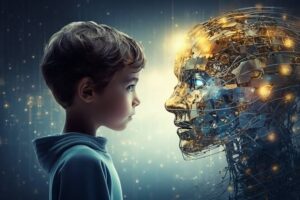
Cheating concludes her warnings by emphasizing her absolute belief in the potential of technology. However, she points out that technical progress does not necessarily mean progress in human life. She summarized her concerns with a fundamental question before celebrating a future in which machines take care of everything on our behalf: Do we build a world in which humans are free to do anything, or a world in which they feel that they are no longer needed?