October 20, 2026

The Constitutional Council’s recent decision regarding the general amnesty law sparked an intense political and legal debate about the limits of constitutional oversight and the powers of the legislative authority. The Council had issued a decision on October 12, rejecting the request to invalidate the law in its entirety, while invalidating some of its provisions and approving binding explanatory reservations specifying the scope of application and excluded crimes, in addition to adopting March 1, 2026, as a unified time limit for the crimes covered, including drug crimes and their cultivation.
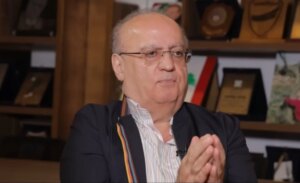
In this context, MP Waddah Sadiq, in a statement to the “Lebanon Debate” website, criticized the Constitutional Council’s approach to the amnesty law, considering that it exceeded the limits of its powers and exercised a legislative role exclusively limited to the House of Representatives, noting that this decision represents the third case in which the Council exceeds its powers. At the same time, Sadiq called for the necessity of preserving the legislative authority of Parliament, and renewing the members of the Constitutional Council in accordance with the established constitutional mechanism, which stipulates that the House of Representatives elects five members and the government appoints the remaining five.
Sadiq explained that the amnesty file is of great importance because it affects the lives of a wide segment of the Lebanese, especially those who have been subjected to injustice as a result of rulings issued by the military court, stressing that seeking justice for these people does not conflict with the necessity of respecting the separation of powers and protecting the role of the legislator.
While addressing the performance of the Constitutional Council, Sadiq recalled the appeal he submitted with other representatives against the law granting contractors in the Ministry of Information retirement rights, pointing out that their objection was based on the need to find a comprehensive constitutional solution, and expressing his surprise that the appeal was rejected without clarifying the reasons for that.
Regarding the implementation mechanism, Sadiq supported the decision issued by the Cassation Public Prosecutor, describing it as “correct,” and stressing that addressing the existing problem requires a legislative path while adhering to constitutional oversight controls and the right to appeal in accordance with the rules.
Sadiq concluded by warning of the political dimensions behind the file, accusing a political movement of seeking to achieve gains under the title of amnesty. He described the current situation of the Constitutional Council as suffering from “brain death” as a result of the vacancy in its membership and the extension of its term for a long period, stressing that its renewal has become an urgent necessity, regardless of positions on its recent decisions or the disputes surrounding the amnesty law.