October 13, 2026

Beirut opposes the challenges of the Arab media from Amman: presenting the modernization law and raising the case of Samir Kassab
Lebanon participated with its new experience in updating the laws regulating the media sector in the “Future of Media and Communications” conference, which was held in the Jordanian capital, Amman, organized by the “Protection and Freedom of Journalists” Center headed by Nidal Mansour, and in partnership with the European Union, amid an Arab media scene facing accelerating challenges that include legislation, artificial intelligence, disinformation, hate speech, and the protection of journalists.
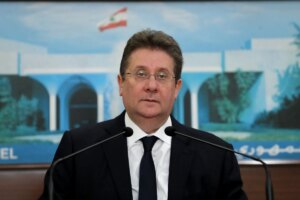
Information Minister Paul Morcos held a series of meetings with Arab and international officials, which was guided by a visit to the Amiri Palace, where he met with the founder of the Jordan Media Institute and the president of the Amman International Film Festival, Princess Rym Al-Ali. His meetings also included the Minister of Communication and the official spokesman for the Jordanian government, Muhammad Al-Momani, the Syrian Minister of Information, Khaled Zaarour, the head of the National Media Authority in Egypt, Ahmed Al-Maslamani, and the General Supervisor of the Palestinian Official Media, Ahmed Assaf.
The discussions focused on enhancing media cooperation and exchanging experiences in developing legislation, confronting hate speech and misinformation, as well as reviewing the recent Lebanese experience. During his meeting with his Syrian counterpart, Morcos again raised the issue of the continued disappearance of the Lebanese photographer Samir Kassab.
In the ministerial session titled “Arab Media Ministers and Leaders Look to the Future,” Morcos reviewed the path of media reform and legislation in Lebanon, especially the new media law and the path that began during the current presidential era. Prominent figures participated in the session, including Princess Rym Al-Ali, Secretary-General of the International Federation of Journalists Anthony Belanger, and Head of the European Union Delegation in Jordan, Ambassador Pierre Chatzisavas.
At another stop, Morcos met at the Lebanese Embassy in Amman with members of the community and the head and members of the Lebanese-Jordanian Business Forum, who handed him an honorary shield in recognition of his efforts in promoting “Lebanon Television” and organizing and digitizing its archive after appointing its management, equipping the “National News Agency,” and initiating a workshop to develop “Radio Lebanon,” in addition to keeping pace with the issuance of the Media Law and related legislation.
The conference witnessed a large Lebanese presence, represented by interventions from a number of media and political figures. Representative Paula Yacoubian discussed the impact of political funding on the media, expressing her concern about the shift of young people and graduates away from political thought and interest in public affairs. She emphasized that change begins with knowledge and the ability to criticize and question.
For her part, the spokeswoman for the President of the Republic, media personality Najat Sharaf El-Din, touched on the phenomenon of digital violence directed against female journalists, highlighting the positives of the new media law in providing them with the necessary protection. In the same context, the head of the Union of Male and Female Journalists in Lebanon, Elsie Moufarrej, explained that the most prominent reforms to the law are the tightening of penalties for those who assault journalists on the ground and electronically. In turn, journalist Yumna Fawaz, during the session “How to Prevent the Killing of Journalists and Impunity,” stressed the necessity of accountability and making the protection of journalists and their rights a top priority to ensure that attacks are not repeated.
This intense Lebanese participation in Moaman comes to embody a serious effort towards translating the new media law into a comprehensive reform path, which goes beyond updating legislation to include protecting journalists, advancing official institutions, and expanding the horizons of Arab cooperation to confront current challenges.