The Secretary-General of Hezbollah, Sheikh Naim Qassem, opened the files of arms, the army, negotiations, reconstruction, and the economic reality at once, declaring his party’s readiness for dialogue regarding arms exclusivity, on the condition of Israel’s withdrawal from the south and the return of the people. During a speech he delivered at the festival commemorating the second anniversary of the martyrdom of former Secretary General of Hezbollah, Sayyed Hassan Nasrallah, and Sayyed Hashem Safi al-Din, Qassem called for freezing direct negotiations and returning to indirect negotiations, accusing the Lebanese authority of giving up “factors of strength” and helping the Israeli-American project instead of confronting it.
Regarding the negotiations, Qassem considered that the framework agreement presented in the interest of the enemy everything that Lebanon could offer in one session, accusing the authority of giving up its power cards and holding it responsible for the continued troubled security situation as a result of its bet on Washington and Tel Aviv. He pointed out that the authority went through seven rounds of direct negotiations with a result of “below zero,” stressing the right of the President of the Republic to negotiate on the condition that he does not violate the constitution, the Taif Agreement, and the ministerial statement. Qassem called on the authorities to raise their voice and go towards indirect negotiations, stressing that everyone will support the defense of Lebanon’s sovereignty.
Regarding the file of weapons and the army, Qasim described the military institution as a “national army,” rejecting demands for disarmament through the army, and questioning the political parties about their connection to this file. He stressed that Hezbollah is open to dialogue, wondering how to dialogue with those who condemned the resistance and its people to outlaw the law. Regarding the land issue, Qassem stressed adherence to the entire area of Lebanon, amounting to 10,452 square kilometers, considering that surrender to Israel means the end of the country and coexistence in favor of the settlements, stressing that “the problem is aggression, not resistance.” He added that any expected Israeli withdrawal will be the result of resistance and not negotiation.
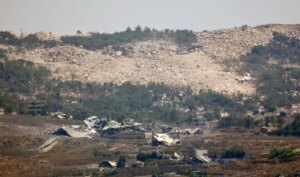
Qassem announced that Hezbollah’s Shura Council decided to name the phase extending from the “Battle of the Powers” until today the “We Stand by the Covenant” phase, stressing that the leadership will continue the same approach in adhering to the resistance and supporting Palestine. He pointed out that the resistance stopped the aggression project and prevented about 90,000 Israeli soldiers and officers from achieving their goals of breaking it or stabilizing the occupation, reviewing the field steadfastness in the towns and villages of Bint Jbeil, Al-Khiam, Aita Al-Shaab, Al-Naqoura, Al-Bayyada, and Ali Al-Taher, which lasted for three months.
On the humanitarian and service side, Qasim called on the authority to assume its responsibilities in shelter, compensation, reconstruction and restoration, declaring his party’s commitment to contribute to these files with capabilities and donations, and to soon unveil a shelter project. On the economic level, he asked the government a series of questions related to the cost of living, the collapse of the currency, depositors’ money, and the performance of the Ministry of Foreign Affairs.
Qassem concluded his speech by recalling the martyred leaders, bringing to mind Sayyed Hassan Nasrallah, Sayyed Hashem Safi al-Din, Fouad Shukr, Ibrahim Aqeel, Abdel Moneim Karaki, Suhail Hosseini, Nabil Qaouk, and Abbas Nilforshan, in addition to those wounded in radio explosions, prisoners, and 3,400 male and female martyrs of resistance and civilians. At the regional level, he criticized American policy and the international system, saluting Iran, the Yemeni people, and “Ansar Allah,” stressing that Palestine will remain the compass and symbol for the future.