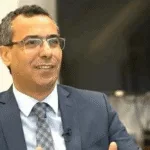
The Lebanese Minister of Agriculture, Nizar Hani, held a series of official and commercial meetings in the Iraqi capital, Baghdad, during a 24-hour working visit, aimed at following up on the export of the Lebanese apple crop to the Iraqi market, strengthening bilateral agricultural cooperation, and discussing facilitating financial transfers related to the trade movement between the two countries.
This visit comes as a continuation of the road map developed by the Ministry of Agriculture to market Lebanese apples and expand their foreign markets, thus contributing to the distribution of the crop and improving farmers’ returns. Minister Hani was accompanied on his visit by the Director General of Agriculture, Engineer Louis Lahoud, and two representatives of the Vegetable and Fruit Exporters Syndicate in Lebanon, while the Lebanese Ambassador to Iraq, Khalil Abdullah Muhammad, participated in the official meetings.
The Lebanese delegation was received at the Iraqi Ministry of Agriculture under the guidance of the Iraqi Minister of Agriculture, Abdul Rahim Jassim Al-Shammari, and in the presence of the Lebanese ambassador. The Iraqi reception delegation included the General Director of the Mesopotamia General Seed Company, Dr. Hadi Hashem Al-Yasiri, and the General Director of the Department of Forestry and Desertification Control, Dr. Bassam Kanaan Abdel-Jabbar, along with a number of specialists.
During the bilateral discussions, Minister Hani discussed with his Iraqi counterpart ways to increase agricultural exchange and facilitate the movement of products between the two countries, with a focus on expanding the presence of apples and Lebanese agricultural products in the Iraqi market, in exchange for enhancing Lebanon’s import of Iraqi agricultural products, such as dates, fodder, and wheat, in support of a balanced trade partnership that benefits from integration opportunities between the two sectors. The two sides also touched on import requirements, shipment flow procedures, addressing obstacles facing exporters and importers, and building regular cooperation channels that give producers greater clarity in planning.
At the conclusion of the meeting, Minister Hani invited his Iraqi counterpart to participate in the “Agri Lebanon” event scheduled to be held at the end of next November. The two sides also discussed preparing for holding meetings of the joint Lebanese-Iraqi agricultural committee, and following up on the revival of the quadripartite agricultural agreement that brings together Lebanon, Iraq, Jordan, and Syria. Hani expressed Lebanon’s appreciation, leadership, government and people, for Iraq’s supportive positions, stressing that fraternal relations constitute a basis for transforming cooperation into mutually beneficial economic projects.
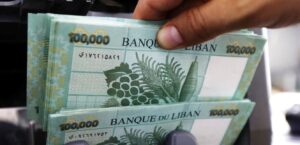
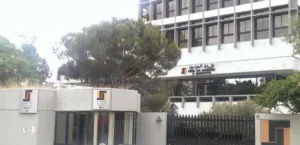
On the financial aspect of trade exchange, Hani and the accompanying delegation held meetings with officials from the Central Bank of Iraq and financial experts, to discuss practical solutions to facilitate bank transfers and support trade movement. The delegation also met with the representative of the Food and Agriculture Organization of the United Nations (FAO) in Baghdad to discuss ways for the organization to support joint cooperation.
In terms of communication with the private sector, the delegation met with Iraqi importers and company representatives, including the director of the “Dhabani” company, to discuss increasing the import of Lebanese agricultural products and expanding commercial partnerships. Hani stressed that the integration of the efforts of the ministry, the diplomatic mission, and the private sector represents an essential element for opening markets, stressing: “We are in Iraq for practical results: broader markets, greater trade exchange, and a true agricultural partnership that serves the farms and the economy in both countries.”