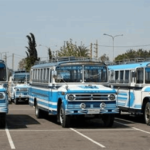
With the start of the school and university year in Lebanon, the repercussions of the fuel crisis extended to burden families through a new chapter: school transportation allowances. In this context, the “Lebanon 24” website learned that a number of parents received letters from school transportation owners informing them of the adoption of a new mechanism for pricing buses and “vans,” so that it becomes monthly and keeps up with fuel schedules, thus abandoning the usual annual or quarterly system.
While some schools included the transportation allowance in the annual fees, all at once or in installments, the continuous rises in fuel prices prevented drivers from being able to stabilize prices for months during which they might be exposed to serious losses as the prices of gasoline and diesel increased.
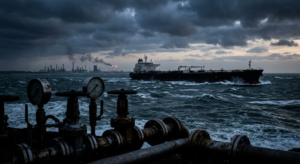
These developments coincide with successive jumps witnessed in the price of Brent crude globally, as it rose from about $96 per barrel at the beginning of September to exceed $105 in the middle of the same month, affected by the escalation between Iran and the United States, and fears of disruption of supplies through the Strait of Hormuz, in addition to the attacks that targeted Saudi Arabia. Given that fuel pricing in Lebanon is linked to an equation that includes customs duties and the average global prices of gasoline and diesel, any external vibration is quickly reflected at local stations and from there into the pockets of families.
For its part, the Student Transport Drivers Syndicate in Lebanon, in a statement issued on the eve of the start of the school year, denounced what it described as “the authorities’ continued policy of indifference” towards the fuel crisis and the cost of transportation. The union indicated that the authority did nothing in the face of the significant increase in operating costs, and did not provide any serious solutions to fuel prices. She stressed that the continuation of this reality places drivers with burdens that exceed their capacity, warning against the consequences of being satisfied with promises and monitoring prices, and called on the Ministry of Energy and government agencies to take urgent measures to reduce the cost, otherwise the crisis will worsen and impose new increases on families.
On the ground, “Lebanon 24” monitored these changes, as the tariff on a line of about 6 kilometers (from home to school) increased from $170 per class last year to $200 this year, an increase of approximately 18%. The tariff rises to about $230 per semester for students coming from more distant regions, while other information showed increases amounting to 40% in various regions.
School administrations justify these measures because the direct transportation allowance is affected by repeated jumps in fuel prices, in addition to the high cost of maintenance, spare parts, and drivers’ wages, which prompts them to re-evaluate transportation allowances periodically, while threatening to raise them again if fuel prices continue to rise.
Faced with these burdens, some families resorted to alternative solutions to reduce costs, such as sharing the delivery task among neighbors, or mothers taking over the delivery of their children themselves despite the additional effort. On the other hand, other families found, after calculating the cost of gasoline, car maintenance, and wasted time, that participating in the school bus remained, paradoxically, the least expensive option.
Thus, the school transportation crisis joins the series of successive crises burdening the Lebanese, turning the cost of transporting students into an additional burden imposed by the fuel crisis on families month after month.