While the Lebanese watch the screens of the global stock market, waiting for crude oil prices to fall, the language of numbers and waterways reveals a shocking paradox: Brent crude may decline internationally, but gasoline and diesel fuel in Lebanon will not follow this decline, but may follow a completely opposite upward path!
Behind this economic puzzle, there are three traps that swallow up any theoretical decline in crude prices:
1. We do not import “raw”… Rather, we buy ready-made derivatives
The common confusion starts from the belief that Lebanon buys crude oil to refine it; While the truth is that the Lebanese market imports manufactured and ready-made oil derivatives (gasoline and diesel).
- Refinery war: The recent drone strikes on Russian refineries disrupted and reduced the production of 3 out of the 6 largest diesel producing refineries there, prompting Moscow to restrict its exports to cover its internal market.
- The fatal irony: When refineries fail, crude oil overflows and its price falls on screens, but the supply of ready-made diesel and gasoline decreases and their prices rise globally.
2. Tsunami shipping fees: The trip costs a quarter of the value of a barrel!
The bill is no longer linked only to the production of fuel, but to how it gets across the fiery seas:
- An astronomical jump in vectors: The charter allowance of some VLCCs has exceeded the threshold Million dollars a day.
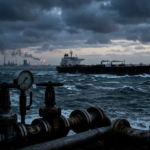
- Methods of war and circumvention: With the disruption of the Saudi oil pipeline (east-west) and the flames of the Bab al-Mandab Strait, ships were forced to circumvent the “Cape of Good Hope” with longer trips, so the cost of shipping jumped to about $26 per barrel On some lines (equivalent to approximately a quarter of the value of the crude itself).
- Mathematically: The cost of such transportation alone represents about 16.4 cents per liter, which is sufficient to swallow up and erase any decline that Brent may record.
3. Diesel: the weakest link that threatens one’s livelihood
Mazut is the most sensitive fuel for Lebanese society because of its direct connection to private generators, transportation fleets, factories, and agriculture. Therefore, its price remaining high is immediately reflected in subscription bills and the prices of food commodities.
From a price crisis… to the danger of scarcity of supplies!
The greatest risk does not stop when prices remain stable or high. The shortage of tankers and the delayed arrival of shipments may impose additional premiums on urgent quantities, which regularly threatens the import movement itself.
Therefore, monitoring the Brent barrel no longer reflects reality; The derivatives arrive at the Lebanese ports, laden with the costs of idle refineries, war insurance, and the scarcity of ships, so that the plate at the terminal remains a hostage to the global transportation and refining crises.