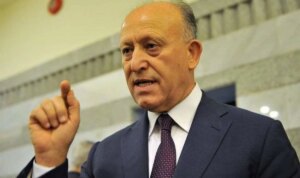
A member of the “Development and Liberation” parliamentary bloc, MP Ali Khreis, confirmed the Amal Movement’s categorical rejection of direct negotiations with Israel under the current circumstances, pointing out that previous experiences, starting with the “Framework Agreement” and ending with what he described as “experimental areas,” have proven futile and do not lead to any tangible results on the ground.
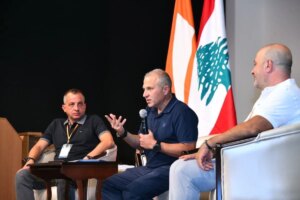
This came during a memorial celebration held at the Husseini Club of the town of Burj Rahal, three days after the death of the expatriate Qassem Muhammad Fakhoury, with the participation of the “Amal” movement and the people of the towns of Burj Rahal, Abbasiya, and Sarafand.
Khreis described the current stage as difficult and dangerous, denouncing the continued Israeli attacks targeting southern villages and towns, and considering that Israeli policy seeks to take life away from this region. Regarding the political settlement file, he made it clear that the rejection of direct negotiations does not stem from an absolute rejection of the principle of negotiation, but rather is closely linked to the lack of confidence in Israel’s commitment to agreements and pledges, reiterating the call for pressure for comprehensive Israeli withdrawal and the deployment of the Lebanese army on the border.
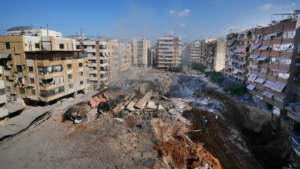
In a context related to the field situation, Khreis pointed to the systematic bombing, bombing, and destruction that affected a number of southern villages, most notably the town of Al-Mansouri, questioning the usefulness of the role played by the United States, the United Nations, and the Security Council, along with the Arab and European countries, in exerting actual pressure to stop these attacks.
On the internal level, Representative Khreis stressed the importance of strengthening national unity as a shared responsibility that falls on all Lebanese, reiterating absolute support for the Lebanese Army as a unifying national institution. In this context, he recalled the positions of Parliament Speaker Nabih Berri calling for protecting civil peace and adhering to the role of the army and its deployment on the border and in the southern villages to protect the people.
On the living and social levels, Khreis called on private school administrations to take into account the difficult economic conditions of the families in conjunction with the start of the school year, calling on the owners of electric generators not to exaggerate pricing in light of the rise in fuel prices. Regarding the issue of the displaced, he revealed that contacts had been made with the Prime Minister and the concerned authorities to ensure that those entitled to receive rental allowances, calling on property owners to unite and take into account the conditions of the displaced families.
Khrais concluded by stressing the need to avoid falling into a political vacuum, explaining that the step to renew confidence in the government came out of concern for the continuity of the work of institutions, and stressing the need for the state and the government to assume its responsibilities in standing by citizens at the economic, financial, social and educational levels.