The office of Israeli Prime Minister Benjamin Netanyahu launched a sharp attack on Turkish President Recep Tayyip Erdogan, accusing him of seeking to “expand his aggression against Israel,” in the wake of an unprecedented escalation between Ankara and Tel Aviv, extending from the war in Gaza to the growing confrontation on the Syrian scene, all the way to Turkish judicial moves against Netanyahu.
Netanyahu’s office said, “Erdogan seeks to expand his aggression against Israel,” considering that what he described as “Erdogan’s pathetic attempt to intimidate Israel’s leaders and soldiers will not achieve any results.”
The Israeli position came after Turkish Justice Minister Akin Gurlik announced that Ankara requested the issuance of a red notice through Interpol against Netanyahu, in the context of the case related to the Israeli Navy’s interception of the “Global Resilience Fleet,” which was heading to the Gaza Strip loaded with humanitarian aid.
According to the Turkish Minister of Justice, the trial continues before the 11th Supreme Criminal Court in Istanbul against 35 people, including Netanyahu, against the backdrop of the interception of ships in international waters and the detention of activists who were on board, while the accusations brought by the Turkish judiciary include “crimes against humanity,” “genocide,” “torture,” “deprivation of liberty,” and other crimes.
On July 14, 2026, the Turkish judiciary issued two arrest warrants against Netanyahu and another Israeli person named Avik Moskowitz, before the Ministry of Justice asked the Ministry of Interior to take the necessary measures to request red notices through Interpol, while referring documents related to the file to the Turkish Ministry of Foreign Affairs.
In his response to the Turkish move, Netanyahu directed sharp personal and political criticism at Erdogan, accusing him of imprisoning opponents and journalists and providing refuge for Hamas leaders, considering that the Turkish move would not succeed in intimidating the Israeli leadership or Israeli army soldiers.
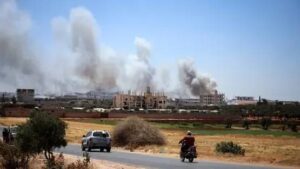
The current Israeli-Turkish tension is not limited to the Gaza issue, as the confrontation between the two countries has moved strongly in recent days to Syria, after the Israeli raids that targeted the Abu Al-Duhur air base in the northwest of the country, amid a sharp dispute over the growing Turkish military role in the Syrian government headed by Ahmed Al-Sharaa.
Israel says that possible Turkish military movements inside Syria represent a threat to its security, and that Damascus was preparing to allow the deployment of Turkish forces at the Abu al-Duhur base, while Ankara denied the presence of its forces at the base before or during the raids, and stressed that its military cooperation with Damascus is focused on training, exchanging experiences, and supporting capacity building of Syrian institutions.
Israeli Defense Minister Israel Katz had escalated his tone towards Erdogan, warning him not to drag Turkey into what he described as “dangerous adventures in Syria,” and stressing that Israel would not allow any party to threaten its security.
On the other hand, the Turkish presidency accused Netanyahu of using allegations of the Turkish threat to justify raids on Syrian territory, and said that Ankara would continue its cooperation with the Syrian government with the aim of enhancing stability and unity of the country, rejecting any Israeli attempt to impose restrictions on Damascus’s relationship with Ankara.
The escalation comes at a time when Syria has become one of the most prominent points of friction between the two sides, after Turkey became one of the most prominent supporters of the new Syrian government, politically, militarily and economically, while Israel views with concern the possibility of establishing permanent Turkish military structures or deploying defense systems and drones inside Syrian territory.
Washington, on the other hand, is trying to reduce the possibility of the tension turning into a direct military confrontation, as it is working to develop mechanisms to prevent friction and exchange information between Israel, Turkey and Syria, after US envoy Tom Barrack described the recent Israeli raids on Abu Al-Duhur as an “unnecessary escalation.”
Turkish-Israeli relations have witnessed a continuous deterioration since the outbreak of the Gaza War in October 2023, as Erdogan’s criticism of the Israeli government has escalated, and trade and diplomatic relations between the two countries have declined, in parallel with Ankara adopting a legal process against Israeli officials and supporting international prosecution files related to the war in Gaza.
The latest response from Netanyahu’s office adds a new level to the confrontation, as the differences are no longer limited to political positions on Gaza, but rather include judicial prosecutions, Interpol movements, and the military presence in Syria, which raises the intensity of the clash between two countries that possess great military and political weight in the region.