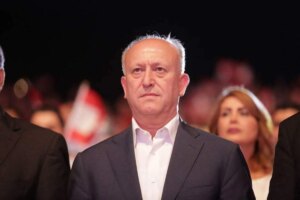
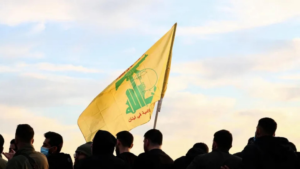
The Jezzine Judicial Authority of the “Free Patriotic Movement” responded to MP Saeed Al-Asmar’s position on the issue of leaflets that were distributed in the Jezzine region in objection to the general amnesty law, stressing that what happened, according to it, falls within the framework of a declared political campaign and not “an act of intimidation with unknown origin.”
The Commission explained that the leaflets are part of a campaign carried out by the youth sector of the “Free Patriotic Movement” in a number of Lebanese regions, in protest against the general amnesty law and the positions of the representatives who supported it.
She pointed out that the leaflets were designed in the form of a “justice record” for representatives who support the law, in a political expression of protest against a law that the “current” considers to have included convicts and convicts, including those involved in the killing of members, non-commissioned officers, and officers of the army and security forces.
She pointed out that the use of the phrase “with blood” in the leaflets was, according to her interpretation, a symbolic reference to the blood of fallen soldiers, refusing to consider the campaign a security threat.
The Commission was surprised by what it described as an attempt to move the issue from the framework of political discussion and accountability to the security track, considering that objecting to a representative’s vote or questioning him regarding a position he took in the House of Representatives is at the heart of political action.
She addressed Al-Asmar by saying that he has the right to object to the content of the leaflets and respond to them politically, and he also has the right to resort to the competent authorities if he has information about the existence of an actual threat, but in return she stressed that his parliamentary vote is a “public matter” and that citizens and political forces have the right to hold him accountable regarding it.
The Commission asked a question about the reasons for Al-Asmar’s vote in favor of the general amnesty law and his position on the objections raised about it, considering that political action is confronted “with the position, the argument, and the answer,” and not by transferring every political objection to the security track.
She concluded by emphasizing that “political accountability cannot be met by summoning security,” considering that whoever takes a position within Parliament must be prepared to confront him politically in front of public opinion.