“Lebanon Debate” – Abdullah Qamh
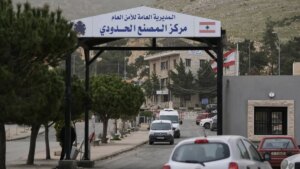
The issue of the Dahr al-Baydar shipment was not just a security file that was transferred to the corridors of the judiciary. Rather, from the moment it was seized, it turned into a highly sensitive political test of the relationship between the state and Hezbollah, and a lightning bolt that almost set off an internal confrontation whose boundaries are difficult to estimate. As tensions escalated, influential diplomatic bodies in Beirut became involved in an attempt to contain the crisis before it moved to a stage whose repercussions were difficult to control.
For the first time since the election of Joseph Aoun as President of the Republic, the “quintet” (excluding the United States) has reappeared, but with a different function. Its mission was not to research constitutional entitlements or rearrange political balances. Rather, it practically assumed the role of a “demining unit” to help dismantle a crisis that threatened internal stability.
The diplomatic move was based on security data that reached the concerned authorities, and also reached various official levels, indicating that Hezbollah is ready to move to escalatory internal steps, distributed between popular movements and political and administrative measures, and including taking to the street, in the event that the authority chooses to raise the level of confrontation with it by referring the Dahr al-Baydar file to the Judicial Council.
It was understood that the party was moving towards putting everyone before a decisive political choice. It has sent signals in this direction. On the ground, through limited movements, and politically, by increasing the pace of his escalatory rhetoric and sending threats. He understood that the party would go to “Zark” everyone in a political choice based on the rule of “with me or against me.” If this situation is reached, the repercussions of which are difficult to contain or reverse, the transformations and risks will force Parliament Speaker Nabih Berri to position himself behind the party, and leader Walid Jumblatt will follow his path, and the government will be in danger of collapsing the authority on which it is based.
Hence, diplomatic advice came together when it was necessary to defuse the explosion, not to push the country towards an internal confrontation in light of a highly tense regional climate, and most importantly, not to provide conditions that might lead to the overthrow of the government.
Containment efforts were distributed among six parties, four of which belonged to the “quintet,” namely Saudi Arabia, Egypt, Qatar, and France, while Iran attended as the fifth party from outside this framework, and the President of the Republic attended as the sixth party.
The political calculations related to the survival of the government were strongly present in the background of these movements. If the party succeeded in pushing Berri, Jumblatt, and Sunni ministers to retreat or leave the government, this would have led, according to the reading on which the containment efforts were based, to an imbalance of power within the Council of Ministers in favor of the head of the Lebanese Forces Party, Samir Geagea, who would practically become the one controlling the course of the government.
Then, any boycott on the part of the “Forces” ministers may turn into a means of disrupting the quorum, and whoever wants to hold a Council of Ministers session must return to Maarab and send her the session’s agenda for approval, thus giving Geagea the position of an obligatory partner in determining what can be put on the government table and what cannot.
Thus, an undeclared diplomatic and political umbrella emerged, converging on one goal, even if the calculations of its participants differed: preventing the explosion of the Lebanese crisis and preserving the existing balances within the authority.
Within this scene, the Saudi role emerged, specifically the role of Prince Yazid bin Farhan, who, according to the data, had serious information about the possibility of the party resorting to internal action aimed at overthrowing the government, which would put the authority and political forces in front of an open impasse.
Against this background, Bin Farhan communicated with Speaker of Parliament Nabih Berri, conveying a Saudi position that does not favor sliding into a cycle of internal violence, at a regional moment that cannot tolerate further escalation.
It is understood that Riyadh fears the collapse of governance in Lebanon through the destabilization of the government, and does not wish, in light of its preoccupation with the Yemeni file and the files of the region, to open an explosive Lebanese file, or to enter a path that might lead to a decline in its influence for the benefit of other regional parties.
It was also understood that Ben Farhan wished for Berri to work to find a way out that would preserve stability, provided that it remained under the roof of the Lebanese judiciary, so that it would not appear as a political settlement that overturns the principle of accountability, and would not, in return, turn into a judicial procedure used to open a confrontation with the party.
Here, Berri entered the settlement production line, taking advantage of his position, relationships, and ability to communicate with the parties concerned. According to the sources, the Council President started from an equation based on reconciling the necessities of this stage: preserving the state’s image before the outside world, preserving its commitments and decisions, and not exceeding the standard set by US Secretary of State Marco Rubio in his contact with President Aoun, which is based on holding accountable those responsible for the Dahr al-Baydar shipment.
Aoun had requested that this criterion be taken into account, because he had committed before Rubio to follow up on the Dahr al-Baydar file and hold those responsible for it accountable, considering that a direct American demand. Therefore, what was required was to find a formula that would achieve judicial accountability, without resorting to options that might open the door to an internal explosion.
From this equation, the judicial director was born.
The solution was to keep the file within the jurisdiction of the military judiciary, as it is the authority competent to look into similar cases, while pushing the security services to speed up investigations, allowing the transition to the prosecution stage. The goal, according to the sources, was not to produce a settlement that removes the file from the judiciary, but rather to reach an understanding that determines the judicial framework within which the case will be dealt with.
This approach was based on the consideration that the seized shipment constituted a violation of the decisions of the Council of Ministers and the applicable laws regulating the possession and transfer of weapons, and that the facts at hand could be addressed before the military judiciary.
In this context, the case of former Minister Michel Samaha regarding the transfer of explosives from Syria, which was heard before the military judiciary and a ruling was issued, was cited as a precedent that could be relied upon to keep the Dahr al-Baydar file within the same judicial process, without referring it to the Judicial Council.
The difference here is not formal. Referral to the Judicial Council would have given the case more serious political and judicial dimensions, while keeping it before the military judiciary would allow the prosecution to be limited to the acts and individuals involved in it, according to what investigations prove, without automatically expanding toward criminalizing the organization, i.e. Hezbollah, and prosecuting it as the party to which the shipment was supposedly destined.
Accordingly, the military claim was based on articles from the Weapons and Ammunition Law and the Penal Code, related to the transfer of weapons and the formation of a gang of evil people. According to the reading on which the understanding was based, this path allows dealing with the facts within the scope of individual prosecutions, and practically separating individuals from the organization, especially since the investigations did not prove that some of the shipment carriers belonged to the party, even though they admitted that they were transporting weapons for its benefit.
After the general framework for the settlement was matured, and coordination between the Presidents of the Republic and the House of Representatives, the role of the Director General of Public Security, Major General Hassan Shuqair, emerged in completing the arrangements and securing consensus on the appropriate graduation.
Choucair, commissioned by President Aoun, moved on various lines of communication, including Hezbollah, conveying an approach based on the necessity of accepting the judicial exit as a result of violating the decisions of the Council of Ministers, and not a step targeting the party as an organization. On the other hand, an understanding developed among those concerned that the file would not be transferred to the Judicial Council.
It seemed that Choucair succeeded in marketing the director, removing objections to it, and passing it on with a minimum of tension. Its shuttle meetings were reflected in the party’s position, which was limited to a statement by Representative Hussein Al-Haj Hassan, devoid of expressions of direct rejection of the judicial director, and focused on considering the decision to be in violation of international conventions that allow resistance to the occupation.
As for the most sensitive element in the settlement and understanding, it was the separation between the party and the individuals who transported the weapons. The prosecution was limited to specific persons under Articles 335, 288, and 307 of the Penal Code, along with Articles 24, 72, and 76 of the Weapons Law, without moving on to accusing the organization itself, or using Articles 312, 314, and 315 of the Penal Code to expand the prosecution in the direction of terrorist characterizations.
Judicial sources reveal that the detainees did not admit that they transported the weapons based on a direct assignment from Hezbollah, but rather spoke of coordination with individuals who informed them that the shipment was intended for the party. Also, according to the same sources, it was not proven that some of the detainees directly belonged to the organization, while it turned out that some of them carried out the transfer operations in exchange for financial sums.
These details were not marginal in producing the solution, but rather formed one of its basic pillars, because they allowed the separation between individual responsibility and organizational responsibility, and prevented the transfer of the file to a different judicial and political level.
It took days of communications to mature the understanding, including the government commissioner to the military court, Claude Ghanem, before its political effects became clearer.
According to judicial and other political information, Ghanem showed cooperation in limiting the allegations to specific legal articles that fit the actions under investigation, without expanding their description or transferring them to other levels of accusation.
One of the most prominent political results of this path was President Aoun’s success in overcoming the pressure exerted by the Lebanese Forces to push the government towards referring the file to the Judicial Council.
Despite the withdrawal of the “Forces” ministers from the first session in Baabda, and then their boycott of the second session in the Government Palace, Aoun did not submit to Geagea’s blackmail. Rather, he proceeded to complete the internal understanding, in parallel with accelerating investigations and prosecutions before the military judiciary, which practically narrowed the margin of return to the Judicial Council’s option.
Thus, the settlement was completed, which was not announced as a settlement, but rather was presented as a normal legal course. However, its political and diplomatic background reveals that it was more than just a judicial procedure, as it performed a dual function: consolidating the state’s authority on the one hand, and preventing the confrontation with Hezbollah from moving to a more dangerous level on the other hand.
Contrary to the way some people close to the party dealt with the results of the understanding, what was achieved represented the minimum that the two parties needed. The party got an essential part of what it wanted, while the state was able to establish the principle that arms transfers were subject to judicial accountability. Thus, the result could be presented as a Win-Win Situation formula, that is, a settlement from which both parties emerge with gains, even if neither of them obtains all of his demands.
For Hezbollah, the mere threat of moving to internal escalatory steps, from the seizure of the shipment at Dahr al-Baydar, up to MP Hassan Fadlallah’s acknowledgment that it was destined for the resistance, was sufficient to show that it possesses powerful cards that it is still capable of using in confronting the authorities.
Most importantly, from the party’s point of view, the solution was not produced outside of coordination with it, but rather came after contacts that included it directly, which means that attempts to deal with it as a party whose position on major security issues can be overcome did not succeed at this stage.
Likewise, the prosecution was limited to one shipment, without extending to other seized shipments, and it did not develop into prosecuting the organization as a terrorist group. These results gain special importance in light of the political climate that has surrounded the issue since its inception.
But the party’s calculations were not limited to the judicial fate of the shipment. The process of transferring weapons, in addition to its connection to his military needs in the context of preparing for the possibility of renewed war with Israel, involved a practical attempt to nullify the effects of the Cabinet decisions issued on August 2, 5, and March 2, or at least to show his non-compliance with them.
It is true that the judicial results did not give him the ability to overturn those decisions, but it did not prevent him from devoting his practical position to them. He coupled his political objection with field action, and showed that he deals with government decisions related to weapons as if they do not exist.
On the other hand, the state looks at the result from a different angle. It considers that it has succeeded in imposing the principle of subjecting any military activity outside legal frameworks to judicial accountability, and that completing the investigations and leading to the prosecution constitutes a practical response to the attempt to override its decisions or deal with them as a dead letter.
Containing the crisis, without sliding into an internal confrontation or toppling the government, gave the authority an opportunity to stabilize its political position and curb the escalatory path that could have threatened its stability.