November 2, 2026

Beirut Wings Aviation Academy confirmed that the investigation conducted by the General Civil Aviation Authority proved the safety and full serviceability of one of its training aircraft, denying the existence of any technical defect or negligence in maintenance work, against the backdrop of the controversy raised by technical indicators that appeared on the aircraft recently.
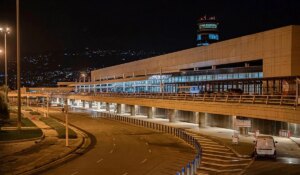
In a statement issued by the company, it explained that the technical investigation related to the Tecnam P2006T training aircraft, which occurred on September 5, 2026, showed that the fuel used was clean and conformed to the specifications. The details of the incident are due to the plane’s crew noticing, shortly after take-off from Beirut Airport, a disturbance in the performance of the two engines, which prompted them to take the decision to return as a precautionary measure, so that the plane landed normally and safely without recording any damage or actual stopping of the engines.
The results of the investigation suggested that the condition was caused by a known technical phenomenon in aircraft with piston engines called “vapor lock,” which often appears in hot weather conditions and is not limited to a specific operator. The company indicated that it informed the General Civil Aviation Authority of the incident on the same day.
In the same context, the Chairman of the Company’s Board of Directors, Engineer Ali Muhanna, confirmed that the reputation of “Beirut Wings” is based on facts and truths, not on rumours, indicating that what was circulated about engines stopping or negligence in maintenance contradicts the conclusions of the official investigation. Muhanna called for adopting the reports and decisions issued by the competent oversight bodies as the sole reference for verifying the facts, away from social media sites.
For his part, the general manager and responsible director of the company, retired pilot Lieutenant Colonel Joe Bitar, stressed that safety is based on adherence to professional and regulatory standards, considering the decision to return to the airport a responsible precautionary measure. Bitar explained that the training fleet underwent a comprehensive assessment in early 2026 by an independent and accredited European body for the Continuity of Airworthiness Management (CAMO), and that the General Authority of Civil Aviation confirmed in writing the airworthiness of each aircraft, and allowed the company on February 26, 2026 to resume all its activities after implementing the recommendations issued by it.
The company pointed out that the aircraft’s certificate of airworthiness was renewed on April 22, 2026 and is valid until April 21, 2027, adding that maintenance work is carried out through the Cypriot company “Airmotive Aviation” approved by the European Aviation Safety Agency (EASA), and whose work was subject to inspection by the General Authority of Civil Aviation and duly accepted.
Beirut Wings concluded its statement by emphasizing that the safety of students and their families is the absolute priority, warning that the circulation of inaccurate information raises concern and harms the Lebanese aviation sector. While it affirmed its respect for media freedom and the rule of law, the company reserved its right to take legal action against those spreading false information.
It is noteworthy that “Beirut Wings” was established in 2006 and is accredited by the General Civil Aviation Authority with Certificate No. 003. It has graduated more than 500 licensed pilots with more than 100,000 flight training hours, and since August 2026 it has been offering a training path compatible with (EASA) standards in cooperation with the “CA Crew Academy” in Cyprus.