October 12, 2026

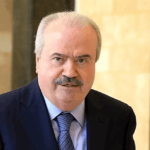
Former Deputy Prime Minister Ghassan Hasbani sent a warning letter to Prime Minister Nawaf Salam, asking him to take urgent decisions during the current week, considering that the country has reached a decisive stage that may lead to a “point of no return” if the delay in treatment continues.
Hasbani pointed out that the government succeeded in laying the foundations for a sustainable solution for the electricity sector by forming the regulatory body, implementing the 2002 law, and appointing a new board of directors for the Electricité du Liban, considering that these steps moved the country from the stage of paper plans and depletion of deposits to building institutions.
However, he pointed out the great pressures imposed by the global energy crisis on the government and citizens, amid the limited ability to purchase fuel, the decline in feeding hours, and the rise in diesel prices and private generator tariffs, which exacerbated the burden of living.
To confront this immediate problem, Hasbani identified three practical steps that require an urgent decision from the Prime Minister, the Minister of Finance, the Council of Ministers, and all the way to the House of Representatives.
The first step was to secure the necessary financing to purchase fuel during the current month, by paying part of the public sector consumption bills, and paying the dues resulting from the exemptions from the south from the state treasury by decision of the Prime Minister and the Minister of Finance.
The second step called for the approval of the moving tariff in the Council of Ministers in preparation for its implementation early next year, to ensure sustainable financing for production and alleviate liquidity crises.
As for the third step, it stressed the necessity of opening additional appropriations by law to pay arrears until the start of collection at the new tariff, at the initiative of the Minister of Finance and the Council of Ministers and referring them to Parliament.
Hasbani concluded his message by warning that any delay or patchwork solutions will expose Lebanon to a major electrical, economic, and social crisis for which the government bears responsibility, stressing that the current week is the “week of decision” and requires immediate decisions instead of formulating new plans.