Beirut – “Lebanon Debate”
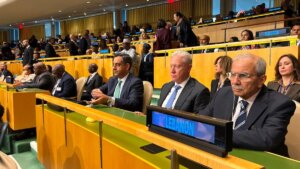
The visit of the high-level Syrian government delegation to the Lebanese capital, Beirut, comes at a pivotal time, establishing a new phase in bilateral relations that goes beyond the protocol nature and towards practical steps in the economic, security, and service files. This visit is considered the most prominent between the two countries since the fall of Bashar al-Assad’s regime on December 8, 2024, and an extension of the visit made by Lebanese Prime Minister Nawaf Salam to Syria last May.
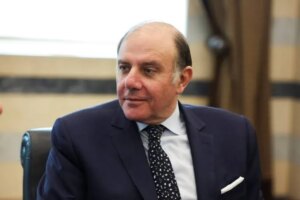
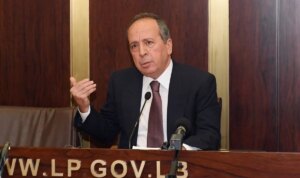
The Syrian delegation includes six ministers, in addition to the head of the Civil Aviation Authority, the CEO of the Syrian Petroleum Company, and the head of the Syrian Investment Authority. According to Syrian Economic Advisor Dr. Osama Qadi in statements to Lebanon Debate, the visit carries a clear political and economic message confirming the opening of a new page based on respect for the sovereignty of the two countries.
Qazi explained that the agenda of the talks includes reviewing more than 40 previous agreements and memorandums of understanding, by forming joint committees to study them and determine what will be kept, amended, or cancelled. The discussions also include ways to increase the modest volume of trade exchange compared to the nature of the borders, and organize the transport and transit sector, especially the crossing of trucks between the two countries and through Syrian territory to Jordan, as well as reducing transit fees and simplifying land procedures.
In the energy sector, the participation of the CEO of the Syrian Petroleum Company is of particular importance in terms of discussing the arrival of Arab gas to Lebanon, the use of Lebanese facilities when needed, and cooperation in the fields of oil derivatives and electrical connection projects. The presence of the head of the Syrian Investment Authority also aims to activate Lebanese investments, amid expectations that sectoral memorandums of understanding will be signed soon.
On the security level, Qazi stressed that controlling the common border, which extends for about 375 kilometers and is characterized by complex terrain, is at the core of the priorities to combat smuggling and close illegal crossings that are exploited to smuggle weapons and drugs.
Qazi described the file of officers of the former Syrian regime as a “hot file,” noting the presence of more than 200 senior officers from the former regime in Lebanon, a reality he considered “uncomfortable” for both parties and raises fears of the use of Lebanese territory for agendas that harm bilateral relations, which necessitates urgent security cooperation regarding it.
Regarding the displacement file, Qadi pointed out that the number of Syrians in Lebanon has declined significantly, pointing out that the deterioration of Lebanese economic conditions and the improvement of living conditions inside Syria will constitute an additional incentive for normal return.
Qadi concluded by stressing that the visit represents a real opportunity to build strategic and institutional relations far from formalities, and achieve economic integration that respects the sovereignty of the two countries and ensures that it does not harbor any parties that harm bilateral relations.