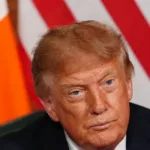
These developments come in the wake of US President Donald Trump signing a law granting him broad powers to impose severe sanctions, including customs duties that may reach 100%, on the five largest buyers of Russian oil, gas and military equipment, as well as countries that help Moscow circumvent those sanctions. The legislation also targets what is known as the “hidden fleet” used to transport Russian crude and exceed the price ceiling imposed by the Group of Seven.
In defiance of potential pressure, the Indonesian Minister of Energy and Mineral Resources, Bahlil Lahadalia, confirmed moving forward with the implementation of the second phase of Russian oil imports, stressing that his country’s supplies are safe, and that the technical details will be announced in due course. Indonesia imported about 770,000 barrels of Russian crude in its first phase last June, worth about $75 million, which was transported on board a tanker flying the Cameroonian flag and subject to multiple international sanctions. Jakarta had also previously announced that it had received a Russian commitment to provide about 150 million barrels of oil at reduced prices, with 100 million barrels of it being sent immediately, and the rest being purchased as needed. The Indonesian government justifies these steps with purely economic considerations dictated by the country’s need to cover the domestic deficit, as its production amounts to about 600 thousand barrels per day, compared to consumption exceeding 1.6 million barrels.
However, this approach raises serious concerns that Indonesian exports to the American market will be subjected to punitive customs duties, and although Indonesia is not ranked among the major global buyers of Russian oil, economists warn of potentially catastrophic repercussions on the Indonesian economy if Washington imposes high duties, given the importance of the American market compared to the volume of Russian imports. On the other hand, other analyzes suggest that the potential US decision is linked to trends in global oil prices, as the chances of imposing measures to reduce supply may decline as prices rise.
In light of these facts, Indonesia faces a very complex equation: balancing between securing its energy needs and benefiting from cheap Russian oil, and protecting its trade relations with the United States. In this context, some analysts recommend the need to reduce dependence on Russian oil and diversify import sources, in addition to opening continuous channels of dialogue with Washington and enhancing transparency about the destination of Russian crude allocated for domestic consumption. On the other hand, another team believes that importing Russian oil could fall within a flexible strategy for energy security, provided that it does not rely on a single supplier to avoid increasing economic and geopolitical risks.