Saad Shanin
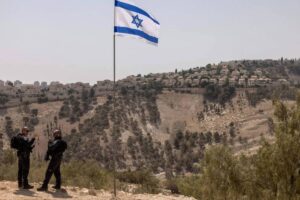
The region stands today on a hot plate of fire, in a scene in which fronts overlap and political and military calculations intersect from the Strait of Hormuz to southern Lebanon, passing through Israel, Yemen and the Gulf, and what happened yesterday in the south, with the injury of two Israeli soldiers by an explosive device and the Israeli response that followed, cannot be separated from this tense regional climate, because southern Lebanon remains one of the most sensitive points in the open conflict between Israel and Iran and their arms in the region.
The incident of the device, despite its military limitations, carries great significance at this time. It comes at a time when the arrangements for stopping the escalation on the Lebanese-Israeli border are still fragile, and at a time when the file of Hezbollah’s weapons and the role of the Lebanese state in imposing the exclusivity of military decision-making has not been finally resolved. Any operation of this kind could quickly turn into a series of responses, especially if Israel considers what happened to be an attempt to test the new rules of engagement.
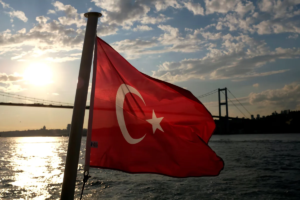
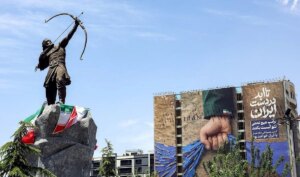
On the other hand, Iran does not seem ready to make easy concessions in the Strait of Hormuz, as Tehran treats the Strait as a strategic card against the United States, and links the easing of restrictions on navigation to broader political and security conditions. This Iranian intransigence not only threatens the relationship with Washington, but also exposes the global economy to the possibility of disruption of one of the most important energy corridors, and gives Tehran the ability to exert pressure beyond the limits of direct confrontation. As tension continues in Yemen and the Gulf, Hormuz becomes part of a broader equation that goes beyond Iranian geography itself.
In Lebanon, the picture appears to be more sensitive, as Hezbollah’s position on its weapons and on the future of the south still constitutes a fundamental obstacle to establishing full state authority, while the Lebanese government is trying to advance a path based on restricting military decision-making to legitimate institutions. Between the two positions, the south remains at risk of becoming an arena for the reflection of any Iranian-Israeli escalation, even if the Lebanese decision was not the one that initiated it.
The situation becomes more dangerous as the Israeli elections approach on October 27. The security confrontation will be strongly present in the Israeli political debate, and any incident on the northern border could gain additional weight inside Israel. This does not mean that every military step is linked to the elections, but the approaching election makes any security escalation more politically sensitive, especially in light of the Israeli debate about deterrence and border protection and the results of recent years of wars.
In Washington, recent developments reflect an increasing level of caution. President Donald Trump’s shortening of his stay at Camp David coincided with American security warnings to its citizens in Israel and the region, at a time when the circle of tension is expanding from the Gulf to Yemen and Lebanon. It cannot be said with certainty that Trump’s decision was directly caused by these developments, but the coincidence of the two steps shows the extent of American concern about the rapid change in the scene.
The main problem is that these fronts are no longer completely separate. What happens in Hormuz affects Washington’s calculations, what happens in Yemen is part of the security of the Gulf, and what is happening in the south is part of Israeli and Iranian calculations, while Lebanon remains the most fragile link because it is trying to establish internal stability at a time when Hezbollah maintains a military decision-making process independent of the state.
Therefore, the most dangerous thing in the scene is not necessarily the presence of a decision by any party to ignite a comprehensive war, but rather the possibility that a series of limited events will lead to a result greater than the ability of the parties to control. A bomb in the south, an Israeli response, Iranian militancy in Hormuz, escalation in Yemen, and successive American warnings. They are all different indicators, but they combine in one moment to say that the margin of error in the region has become very narrow.
The region is not facing a certain all-out war, but it is facing a very dangerous stage, where a single incident in the wrong place, and at the wrong time, could open a wide door to an escalation that will be difficult to close. In southern Lebanon specifically, the most important question remains: Can the Lebanese state prevent the south from returning to being an arena for settling regional scores, before any new field explosion becomes a spark for a larger confrontation?