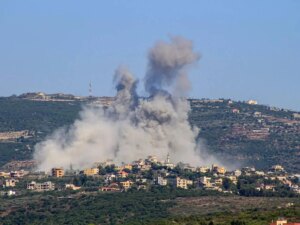
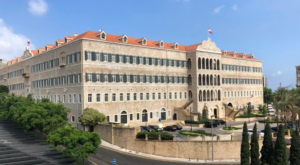
The losses of the Israeli war on Lebanon are not limited to the victims, destroyed homes, and occupied lands, but rather extend to the country’s memory and its historical monuments, in a targeting that affects the identity of the Lebanese people and their cultural past.
In an opinion article published by the British newspaper The Guardian, writer Simon Jenkins believed that the Israeli war on Lebanon reached its climax in June through what appeared to be an unjustified bombing of the historic port of Tyre.
According to the writer, the bombing included the site of the Roman Hippodrome, while Beaufort Castle, which dates back about 1,000 years, was also damaged.
Jenkins considered that these attacks confirm that historical sites no longer receive any protection in modern wars, and that bombing no longer targets armies and military structures alone, but rather targets landmarks that summarize the identity and memory of societies.
The writer believes that air wars differ from ground confrontations, because the perpetrators of the raids operate from distances that make them almost invulnerable, while the victims and targets in front of them appear small and unknown. Moreover, aerial bombardment does not occupy the land and does not guarantee the surrender of the opponent. Rather, it often turns into a show of force on the part of political and military leaders.
After World War II, international efforts were made to establish rules protecting cultural and historical sites during conflicts, leading to the 1954 Hague Convention and conventions relating to the protection of cultural property.
But the collapse of international governance in recent years has made these rules, according to Jenkins, incapable of preventing the destruction of heritage, while victory in current wars is sometimes measured by the extent to which the opponent’s identity and morale are damaged, not only by the number of deaths or the size of military losses.
UNESCO continues to document the fate of cultural heritage in war zones, but documentation alone does not save a historical site from bombing or restore a destroyed landmark.
The World Monuments Fund also plays a role in sending aid, experts, and materials to conflict areas, with the aim of protecting damaged buildings and stabilizing them in preparation for possible restoration in the future.
In Lebanon, targeting Tire or Beaufort Castle is not only an attack on ancient stones, but rather on a history that goes beyond the age of wars and current political borders.
When Israel bombs monuments that carry the memory of Lebanon, the target is not an individual archaeological site, but rather the right of the Lebanese and their future generations to preserve their history and know their past.