October 27, 2026

After years of stagnation resulting from the financial and banking crisis and the repercussions of the recent war, the housing issue has returned to the forefront of official discussion in Lebanon through the introduction of the “rent to own” project and a plan to relaunch housing loans starting in 2027, as part of a strategic national effort aimed at alleviating the living burdens on the Lebanese and reviving the role of the General Housing Corporation.
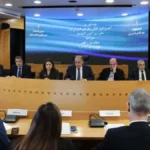
In this context, the Economic, Social and Environmental Council held an expanded discussion session entitled “The Rent-to-Own Project and Prospects for Housing Security in Lebanon,” at the joint invitation of the Chairman of the Council, Charles Arbid, and the Chairman of the Board of Directors, General Director of the General Housing Corporation, Ronnie Lahoud, with the participation of the Minister of Social Affairs, Hanin Al-Sayyid, and Representative George Uqais. The meeting was attended by the Vice President of the Council, Saad Al-Din Hamidi Saqr, the Director General of the Ministry of Social Affairs, Judge Hala Al-Mawla, the President of the General Labor Union, Beshara Al-Asmar, the Head of the Syndicate of Real Estate Brokers and Consultants, Walid Moussa, the President of the Syndicate of Owners of Real Estate and Rented Buildings, Patrick Rizkallah, the Vice President of the Chamber of Commerce, Industry and Agriculture, Nabil Fahd, Mazen Halawi, representing the Bank of Lebanon, the President of the National Council of Lebanese Economists, Salah Oseiran, the Mayor of Tripoli, Abdel Hamid Karima, and the President of the Union of Keserwan Municipalities Elias Baino, President of the Women Leaders Association Madiha Raslan, President of the National Federation of Trade Unions and Employees Castro Abdullah, and President of the “Ogero” Employees Union Emily Nassar, along with members of the Council and an elite group of stakeholders.
During the session, Ronnie Lahoud reviewed a “road map for a national housing strategy,” stressing that economic advancement and social security cannot be achieved in isolation from moving the wheel of the housing sector. He announced an anticipated opportunity to launch housing loans and those related to solar energy projects in the year 2027. He explained that the plan is based on several paths, the most prominent of which is investing in lands belonging to the General Housing Corporation early next year; The lands located in the industrial areas will be rented to industrialists, while the residential lands will be invested to build new housing units, stressing the importance of strengthening partnerships with municipalities and the private sector to reduce the housing shortage crisis. Lahoud also pointed out that the plan includes a “rent-to-own” project directed to people with limited income who are unable to secure the first payment for immediate ownership, with the need to approve tax incentives for real estate owners and developers.
For his part, Charles Arbid stressed that the housing issue is “a social issue par excellence,” considering that achieving stability and social protection is closely linked to the availability of adequate housing. He pointed out that the banking crisis of 2019 led to the cessation of the growth of the sector that previously benefited people with limited income, asking about ways to encourage young people to stay in the homeland in the absence of the minimum requirements for rent or ownership. Arbid called for the necessity of adopting a stable, long-term national policy that extends for five or ten years, independent of government changes, hoping that the efforts of the Minister of Social Affairs and the government will reach a legislatively stable strategy, stressing that economic stability is built through production, equal opportunities, and combating poverty, not through seasonal solutions.
In turn, Minister of Social Affairs, Haneen Al-Sayed, confirmed that the succession of crises, leading to the repercussions of the recent war and the 2024 crisis, has made the housing file the most prominent challenge on the national scene. She explained that since assuming the duties of guardianship of the General Housing Corporation, she has worked to “breathe the spirit” into it after years of paralysis. Al-Sayed revealed her success in allocating financial credit to the institution within the 2027 budget, which represents the first foundational step to reactivate its lending role, pointing out that the anticipated national strategy – which was prepared through a series of consultative sessions – will soon be submitted to the Council of Ministers to obtain national approval. She added that the strategy is not limited to the option of ownership only, but also includes regulating and protecting the residential rental market.
In the legislative context, Representative George Okais presented the legal problems facing the rental sector, warning of the challenges represented by the expiration of exceptional legal deadlines for residential and non-residential rental contracts, and the responsibility that this imposes on Parliament to find fair formulas that protect tenants from homelessness and do not undermine the owners’ rights to investment and maintenance. Akis called for radical and transparent reforms in legislative work, away from the policy of procrastination and procrastination, in a way that restores confidence and stability to the real estate and housing sector in Lebanon.