November 14, 2026

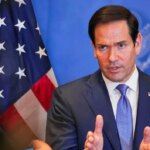
US Secretary of State, Marco Rubio, made a sharp comparison between the two regimes in North Korea and Iran, distinguishing between a regime that seeks exclusively to ensure its survival and an Iranian leadership that he described as expansionist and revolutionary, and warning of the disastrous repercussions of Tehran obtaining a nuclear weapon.
During a speech he delivered, Friday, at the National Federal Lawyers Association conference in Washington, D.C., Rubio explained that North Korean leader Kim Jong Un does not pursue an expansionist policy and does not seek to invade neighboring countries such as Japan or China. Rather, most of his attention is focused on ensuring the continuation of his regime, adding that he does not justify the repressive practices and atrocities that North Korea has witnessed.
On the other hand, the American minister painted a completely different picture of the Iranian leadership, describing it as radical, expansionist, and revolutionary, and considering that the Iranian leader – based on the founding documents of the Islamic Republic – does not view himself as the leader only of Iran but of all Muslims, and sees exporting the revolution outside the borders as a sacred duty.
Rubio warned that Iran’s possession of a nuclear weapon would enable it to “hold the region and the world hostage,” stressing that understanding this revolutionary ideological nature is an essential key to understanding Iranian political behavior.
Rubio’s statements fall within the context of defending President Donald Trump’s administration’s strategy toward Tehran, which aims to prevent it from possessing nuclear weapons in any way, noting that sanctions and economic pressures have weakened the Iranian regime and contributed to reducing the need for interim military options.
This comparison sparked mixed reactions on the American domestic scene. California Governor Gavin Newsom criticized Rubio’s statements, considering them “in defense of North Korea,” at a time when other media reports highlighted the strategic distinction he made between Pyongyang’s survival goals and Tehran’s expansionist project, in conjunction with continuing regional tensions related to the nuclear program and the activities of Iranian agents and allies in the region.