November 8, 2026

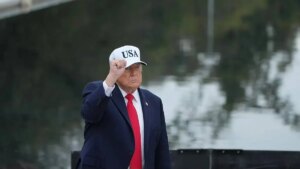
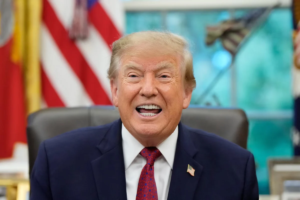
US President Donald Trump sent dual messages to Tehran, ranging from threatening to destroy Iranian infrastructure to opening the door to a diplomatic agreement. Trump stressed that the resumption of US military attacks has become “extremely unlikely” in the event of progress in negotiations on the nuclear program and the reopening of the Strait of Hormuz, but in return he revealed extensive military preparations and specific targets that could be struck within hours if diplomatic efforts fail.
In a 20-minute phone interview with CNN correspondent Jim Sciuto, Trump repeated five times that a return to war was extremely unlikely, linking this possibility to Iran’s willingness to sign an agreement that he described as “very strong.” Trump said: “It depends on whether they will sign a very strong agreement. It is very unlikely that this will be necessary,” adding that Iran has become a “failed state” suffering an economic collapse and inflation that has reached 301% during the current year, noting that his country has inflicted massive military and economic losses on Iran and is capable of directing additional strikes.
Trump’s statements come 8 months after the outbreak of war, amid a military and diplomatic stalemate, continued Iranian attacks on oil tankers in the Strait of Hormuz, and the absence of substantive progress in the negotiations mediated by Qatar. Despite the secrecy of the details of the talks, hardliners in Tehran are relying on the results of the US midterm elections, indicating a decline in Trump’s political power due to the unpopularity of the war, betting on the possibility of making concessions that will allow Iran to continue its nuclear program and maintain its control over the Strait of Hormuz.
On the other hand, American pressure continues through the difficulty of selling Iranian oil and freezing billions of dollars in financial assets in foreign banks. The US Army announced a reward of up to $20 million in exchange for information about the Iranian nuclear program, and launched a special task force to prevent Tehran from using land routes to transport advanced weapons, confirming its military readiness with the presence of 3 aircraft carriers in the region, fully prepared and armed.
The American President revealed that targets had been identified inside Iran, including power plants and bridges, explaining that the American forces had placed 38 bridges within a bank of targets that could be destroyed literally within one hour. However, he indicated that he did not want to implement this scenario due to its long-term effects on the Iranian economy and reconstruction. In his assessment of Iran’s defense capabilities, Trump claimed that previous strikes had completely destroyed its air defense systems, claiming that Tehran no longer possessed only 10% of its missile capabilities and 15% of its drone capabilities.
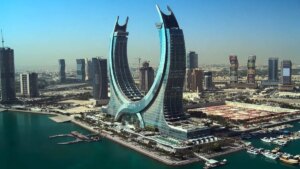
On the diplomatic track, the Middle East witnessed intense movements following the midterm elections, as Qatar announced that Trump had made a phone call to its Emir Sheikh Tamim bin Hamad Al Thani on Friday to discuss reducing the escalation. This was preceded by diplomatic action by Iranian Foreign Minister Abbas Araghchi through contacts with his counterparts in Saudi Arabia, the Emirates, the Sultanate of Oman, Pakistan, Kuwait, Jordan, Turkey, Cyprus, and Qatar.
At the conclusion of the interview, Trump reiterated that resuming military operations “will likely not be necessary,” considering that the Iranians “desperately want to reach an agreement.” Thus, the American message is to give the negotiations an opportunity to reach a nuclear agreement and arrangements for the Strait of Hormuz, while keeping the military force ready to intervene if the talks falter.