November 7, 2026

Political attention in Israel is turning to the presidential headquarters as President Isaac Herzog approaches, tomorrow, Sunday, his decision to appoint a new president to form the government. This comes after the head of the Yashar Party, Gadi Eisenkot, received the recommendations of 67 deputies in the Knesset out of 120, compared to 46 deputies who supported Benjamin Netanyahu, in a move that opens the door to regional questions, especially in Lebanon, about whether this change will lead to an adjustment in Israeli policy in the south or will maintain the current rules of confrontation.
The Israeli presidency announced that Eisenkot’s issuance of a number of recommendations does not automatically guarantee him the formation of a government, in light of the existence of fundamental differences between the parties supporting him and complications that prevent the building of a cohesive coalition, which Herzog confirmed, indicating that the political scene is still unresolved.
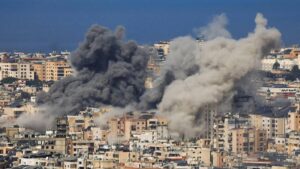
For Beirut, interest in Israeli developments goes beyond parliamentary boundaries, given Eisenkot’s military background; He is a former chief of staff of the army and former commander of the northern region, and the owner of the controversial “Dahiya Doctrine” announced in 2008, which requires the use of excessive and disproportionate force against Lebanese villages based on the extent of the destruction that occurred in the southern suburbs of Beirut during the July 2006 war.
Eisenkot’s recent positions did not show a retreat from this tough approach towards Hezbollah. Last June, he criticized Netanyahu’s acceptance of American restrictions on military operations against the party, stressing the need to give the Israeli army the freedom to move comprehensively, including targeting the southern suburbs while neutralizing the Lebanese national infrastructure.
In the same context, analyzes of the newspapers “The Jerusalem Post” and “The Times of Israel”, along with estimates by American research centers, show that the potential difference between Netanyahu and Eisenkot lies in the management of the Hezbollah disarmament file, coordination mechanisms with Washington, and dealing with the Lebanese army, and not in the declared basic Israeli goal.
Some of these estimates indicate the possibility of Eisenkot showing greater flexibility in granting a role to the United States and France within the security arrangements, and linking any partial Israeli withdrawal to field steps carried out by the Lebanese army, but this remains within the framework of political analyzes without a declared commitment to withdraw or stop the raids.
A clear paradox emerges here: the possibility of changing the method of negotiation with Lebanon in isolation from the essence of Israeli demands, and the continuation of military operations by the Israeli army despite the change in leadership in Tel Aviv, especially with Israel linking any withdrawal from the Lebanese territories it controls to the file of Hezbollah’s weapons and border security arrangements.
This stage is gaining extreme sensitivity in light of the continuing US-Iranian tension, as any potential regional escalation may lead to direct repercussions on southern Lebanon, regardless of the identity of the Israeli prime minister, in light of the military decision being linked to US positions and developments on the ground.
Accordingly, Eisenkot’s approach to the assignment is not a definitive indication of the end of the escalation or the inevitability of a new confrontation, as the real test lies in his practical position on withdrawal, stopping raids, and border military deployment, and the nature of the role of the Lebanese army in any anticipated security arrangements. The outstanding question remains whether political change in Israel is able to open a window to modify the course of the confrontation, or maintain the same military approach with new faces.