November 3, 2026

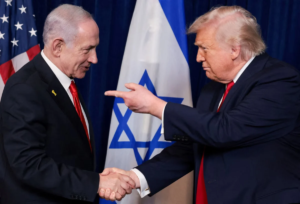
US President Donald Trump’s announcement that he had reached an understanding with Israeli Prime Minister Benjamin Netanyahu to stop US security aid to Israel by the end of 2026, raised broad questions about the future of military support between the two countries. This announcement comes at a time when the current agreement does not expire until the end of 2028, while ongoing negotiations emerge for a different plan based on gradually reducing US grants over a period of 10 years, leading to their complete cancellation.
In a report published by the Israeli Channel 12 website, journalist Barak Ravid revealed that the two sides are holding discussions regarding a new security agreement for the next decade. The report pointed out a surprise in that the idea of ending aid was not an American initiative, but was put forward by Netanyahu himself, based on the advice of former Israeli Minister Ron Dermer, during a meeting with Trump at the Mar-a-Lago resort in December 2025. On the other hand, former Israeli National Security Advisor Yaakov Nagel opposed this approach and urged Netanyahu to abandon it. Trump was surprised by the proposal, telling Netanyahu: “But, Bibi, I support providing aid to Israel.”
Trump’s statements to Fox News last Tuesday, in which he confirmed an imminent cessation of aid, contradict the existing security agreement and Netanyahu’s previous positions, while the Israeli Prime Minister’s Office remained silent and did not issue any comment. The current agreement signed under former President Barack Obama stipulates the provision of $3.8 billion annually to Israel until the end of 2028, which means that any cessation of funding before this date requires the approval of Congress, which has the authority to approve budgets for the years 2027 and 2028.
If the Democrats control the House of Representatives in the US elections, the option of completely stopping aid before the end of the current agreement remains an extreme scenario given the presence of a pro-support majority in Congress. However, the most likely possibility is to impose restrictions on the uses of this aid without canceling it completely. It is noteworthy that Trump’s statements came in response to a question about the positions of the Democratic Senate candidate for the state of Michigan, Abdul Sayed, who announced his support for stopping aid, as Trump considered that the candidate’s position was no longer important due to the existence of a prior understanding with Netanyahu.
In terms of details, the new agreement being negotiated aims to end direct grants within a decade at levels lower than the previous agreement, provided that these reductions are converted into investments in joint research and development projects that include the fields of defense, intelligence, and military technology. This plan does not mean ending security cooperation, but rather reorganizing it, although the negotiations are still progressing at a slow pace and are far from final signing.
Between Trump’s announcement, the current agreement lasting until 2028, and the Israeli plan to reduce grants over 10 years, a clear discrepancy emerges between the political statements and the actual negotiating path, which confirms that the discussion between Washington and Tel Aviv goes beyond the termination date to reformulating the essence of the security partnership between the two countries.