October 26, 2026

Danny Haddad – MTV
Who will succeed Nabih Berri? This question will be the title of a future stage, even if it begins to be asked behind the scenes with caution. The man is the most prominent political figure associated with a long period in Lebanon’s history, from his presidency of the Amal Movement in 1980 until today, through his assumption of the presidency of the House of Representatives for 34 years and six days, completely and completely. During which he carried a hammer and hit the table, made settlements and deals, fought confrontations, achieved gains, and sometimes prevented the country from sliding into something worse than what we are in.
Berri never agreed to engage in the issue of inheritance. He draws boundaries for every aspirant, from the family and outside it, and answers with his southern accent, firmly, when asked about the subject. This principle, which is not very familiar in our Lebanese political life, has both positive and negative aspects. The positive thing is that the man who took the fight against feudalism as the title of his political launch refuses to practice the same behavior, so the Berri family joins the families that practice politics, generation after generation.
The negative is that it opens the door to a struggle over succession, with three sides: the presidency of the Amal Movement, the parliamentary seat, and the presidency of the House of Representatives. We have begun to notice competition among those around him for these positions, although it is still in its infancy, but it is likely to escalate as the days pass.
The question of succession becomes more urgent if Berri decides not to run, knowing that he will have reached ninety years of age when the electoral due date arrives in May 2028, especially since this election is likely to be postponed again.
It is certain that no one today can decide the answer to the question of succession, although we are almost certain that no one is able to succeed him in all three positions together, meaning that the succession may fall to three people.
The logic of matters leads us to three names from outside the family: Representative Ali Hassan Khalil, Representative Qabalan Qabalan, and Ahmed Al-Baalbaki. The first and third, as a reminder, are on the US sanctions list, which logically cuts them off from the path to the presidency of the Council, which will be open to a broader conflict after the next parliamentary elections, according to the circumstances related at that time to the reality of the country and the Shiite sect. The names of Yassin Jaber, Abbas Ibrahim and others stand out here.
Within the family, a conflict emerges between two generations and two experiences: the second son, Abdullah Berri, and the youngest son, Basil Berri. The strengthening of the chances of one of them is linked to several factors, the most prominent of which is whether Berri decided to leave his parliamentary seat while he was alive. In this case, he will be the one who chooses his successor in the parliamentary seat, who may go to one of the two names, with the second being preferred.
But Nabih Berri’s succession goes beyond the framework of family, environment, and sect. Political life will not return to what it was without him, and it will lose, in many cases, its balance, just as the Shiite community will lose the voice of reason that has repeatedly prevented it from moving further towards mass suicide, and has remained a voice that dialogues with the Arabs and the West, so that they listen to it and resort to it.
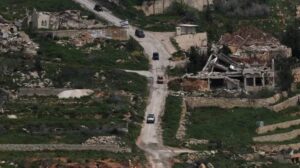
If Nabih Berri was immersed in sadness over the destruction that befell the south, which he had been the largest contributor to over the course of forty years, the fear also lies in the fact that succession struggles will lead to the demolition of the political position he has built in the Lebanese equation. Note that his surroundings began to witness rams about an orientation here and an appointment there, in what resembles a struggle between the wings that has begun to appear, and may develop further.
Raising the issue of Nabih Berri’s succession has nothing to do with ages, as it is in the hands of God. The health of “the president,” as those close to him call him, is good. The approach here is political, and it is an anticipation of what may come in the coming days. Until then, Nabih Berri will remain the number one player in Lebanese political life, sometimes entertaining you with his performance, even if you are in a position of rivalry. Some say that his opponents may one day miss him more than his allies.