October 18, 2026

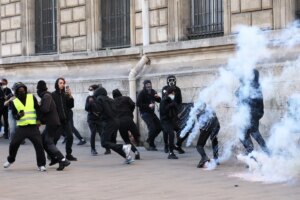
The Lebanese scene is witnessing a series of security developments and successive field movements in several areas, including Semaan Gallery, Bechara El Khoury, and Saadiyat, leading to the real estate ownership crisis in the northern Matn. These events raise growing concerns about internal stability, highlighting the state’s ability to impose its prestige and control the street amid sharp political tensions and the absence of national consensus.
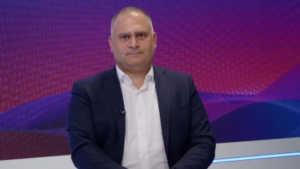
In this context, writer and political analyst Sarkis Abu Zeid warns, in statements to Lebanon Debate, that the accumulation of political and security crises, in parallel with the state’s inability to impose its authority and the absence of internal agreement, may push the country towards dangerous slides, while ruling out the assertion of a return to a civil war scenario at the present time.
Abu Zeid explained that the internal scene does not suggest reassurance in light of the inability of the political forces to contain the escalating tensions or implement their agendas, pointing to the exacerbation of differences as a result of overlapping political tensions, security disturbances, and smuggling issues. He believed that the lack of consensus among the Lebanese hinders the state’s ability to impose its security prestige as required.
The political analyst warned that the continuation of these conditions may lead to a limited security explosion, the repercussions of which would expand in a way whose results are difficult to predict, stressing at the same time the need to monitor regional and international developments to determine the course of the situation in the country, without asserting the possibility of the outbreak of a new civil war.
Regarding the similarity between the current stage and the atmosphere that preceded the 1975 war, Abu Zeid stressed that the current data are not sufficient to issue a final ruling, explaining that Lebanon’s future remains dependent on regional and international developments, especially the situation in Syria and the nature of its relations with neighboring countries, amid the intense competition between Turkey, Saudi Arabia, other Arab countries and Israel for influence. He pointed out the attempts of some parties to lure Syria into performing regional roles that may include the Lebanese arena, which may have very important repercussions given the size of the Syrian presence and its direct impact on the local reality.
In response to the possibility of the potential Syrian role becoming a factor of sedition, Abu Zeid expressed his fears that these roles would take on a security or sectarian nature, depending on the circumstances. He pointed out that there are more than a million Syrians in Lebanon, considering that this population may constitute an influential political and security weight in some areas if regional developments take a sectarian turn, which requires careful monitoring of the Syrian transformations and their direct repercussions on Lebanese balances.
Abu Zeid concluded by stressing that the Lebanese scene remains open to various possibilities, and that the compass of the next stage will be determined based on regional transformations, especially in Syria, in addition to the extent of the success of the Lebanese forces in reaching internal understandings that prevent political differences from sliding into broad security confrontations.