October 18, 2026

Farid: $48 billion in non-oil merchandise exports by the end of 2025 and private sector investments rising to 65%
The Minister of Investment and Foreign Trade, Mohamed Farid, announced that non-petroleum merchandise exports amounted to $48 billion by the end of 2025, stressing the importance of spreading financial, investment and export culture, and enabling young people to participate in economic activity as a major driver of supporting development, through integrating awareness efforts with developing regulatory frameworks and employing technology.
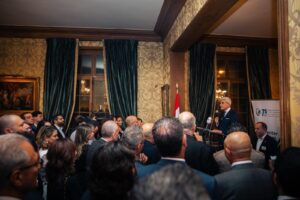
Farid’s statements came during the opening of the trading session at the Egyptian Stock Exchange in celebration of the World Investor Week organized by the International Organization of Securities Commissions (IOSCO), where he explained that the regulatory amendments in accordance with the controls of the Financial Regulatory Authority provided broader opportunities for the participation of groups under the age of 21 in the financial market, stressing the need to protect new investors from harmful practices, and to enhance cooperation between the Stock Exchange, the Financial Supervision Authority and universities to build human capital.
At the export sector level, the Minister pointed out the importance of introducing young people to the trade agreements with which Egypt is linked and the preferential advantages they provide for Egyptian products in foreign markets, especially the agreements with the European Union, Arab countries, Latin American and Caribbean countries, and Turkey, as well as familiarity with the rules of origin and regulatory requirements. He called for cooperation with universities to introduce students to job opportunities in exporting companies, pointing to the role of technology and artificial intelligence in enhancing exports of goods and services.
In the investment file, Farid revealed that investment zones represent an effective mechanism to attract local and foreign investments and localize development by facilitating procedures, accelerating project implementation, creating direct and indirect job opportunities, as well as maximizing the benefit of infrastructure. He stressed continued coordination with the Ministry of Housing and the concerned authorities to expand the establishment of public and private investment zones and free zones, while simplifying procedures and automating services electronically to enhance transparency.
The Minister of Investment indicated that the private sector’s share of total investments in Egypt increased to about 65% during the third quarter of the fiscal year 2025-2026, compared to about 40% to 45% previously, pointing out that the private sector absorbs more than 70% of the workforce.
He added that Egypt has various components to attract foreign direct investment in the real estate, production, and industrial sectors, such as fish, building materials, and construction, recording foreign direct investment flows of about $18 billion by the end of fiscal year 2026. He concluded by emphasizing that achieving targeted growth rates ranging between 5.5% and 6.5% during the coming years requires raising the investment rate to about 25% of the gross domestic product to support the production base and provide job opportunities.