October 18, 2026

The “Follow-up Committee for Lebanese Displaced Persons from Syria” brought the file of thousands of families who forcibly left their homes and property back to the forefront of events, calling on the Lebanese state to assume its constitutional and national responsibilities, and to approve a comprehensive emergency plan that meets basic needs in the sectors of housing, education, medical care, and social assistance, in parallel with protecting their real estate rights and following up on it officially with the Syrian side.
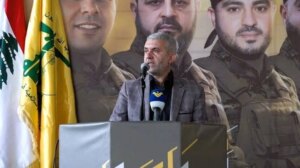
This came during a press conference held in the presence of Representatives Ghazi Zuaiter, Rami Abu Hamdan, and Ihab Hamadeh, along with members of the committee and religious and social figures. The attendees stressed that the issue is distinctly national and does not belong to any political party, but rather represents a test of the state’s responsibility towards its citizens who lost their homes and livelihoods.
Representative Ghazi Zuaiter explained that a large number of these families own lands and real estate in Syria whose roots go back more than two centuries, pointing to the dual citizenship that some Lebanese hold there. He pointed out that the file was presented to the Prime Minister, who in turn referred it to Deputy Prime Minister Tariq Mitri, in her capacity as head of the Lebanese committee concerned with joint files with Syria.
For his part, MP Rami Abu Hamdan stressed the absence of an adequate safety net for the families of the displaced so far, calling for the formulation of an integrated social, economic, educational and health plan, and the launch of a strict diplomatic and legal path that guarantees the stabilization of the Lebanese property and prevents any attack or confiscation of it.
In the same context, MP Ihab Hamadeh reviewed the scale of the crisis in numbers and documents, indicating that the toll of the displaced includes more than 25,000 Lebanese, 4,071 displaced families, and 19,105 citizens holding Lebanese citizenship, in addition to the total or partial destruction of 2,800 homes.
Hamadeh revealed that there are 16 towns in Syria with a majority of Lebanese ownership and residency, in addition to the presence of Lebanese property in between 40 and 50 other villages. He pointed out that some ownership documents date back to the period between 1750 and 1800, confirming that these official documents were handed over to the Lebanese committee headed by Tariq Mitri.
The representatives concluded the conference by emphasizing their demands of conducting an accurate survey of the damages, providing health, educational and housing services, and addressing the crisis of students’ academic documents, as well as activating the role of the Supreme Relief Authority, the Ministry of Social Affairs, and the Emergency and Disaster Management Authority. They announced the continuation of movements at the level of presidencies, ministries and the joint committee, coinciding with the preparation of a press conference in the House of Representatives to push the government towards adopting an official plan with clear implementation mechanisms.