October 17, 2026

An official inspection mission began at a pharmaceutical warehouse in the Semaan Gallery area with rapid security developments, and ended with a security patrol being surrounded inside a building amid an armed gathering and threats, before Lebanese army units intervened to break the siege and secure the groups’ withdrawal from the place.
The details of the case go back to the Minister of Health, Rakan Nasr al-Din, referring the medication file to the Cassation Public Prosecutor, Ahmed Rami al-Hajj. Accordingly, the latter assigned the head of the Central Criminal Investigation Department to open an immediate investigation, inspect the warehouses of the companies and relevant agents, seize the drugs included in the list, prevent their circulation, and verify the identities of the company owners in the presence of an observer from the Ministry of Health.
In this context, a patrol from the Central Criminal Investigation Department went to the main headquarters of one of the companies in Bir Hassan, where it was informed that the warehouse was located in the Zaghloul building in the Semaan Gallery. Inside the apartment, the force found about a thousand boxes of medicine out of seven thousand brought into Lebanon by an exceptional decision from the Minister of Health prohibiting their sale, in conjunction with a circular issued by the laboratory that manufactured in India prohibiting the sale of these medicines as well. The loss of about six thousand packages raised serious questions about their possible circulation in the market, while the warehouse was sealed with red wax.
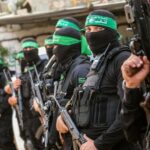
The patrol did not face any objection at the beginning of the raid, but when they began to seal the apartment, four armed men came and identified themselves as belonging to Hezbollah, and demanded that the force leave under the pretext of lack of prior coordination with the party. When the patrol rejected their request, the entrance to the building was closed and its members were trapped inside, while the numbers of those gathered increased and later reached about two hundred armed men.
The surrounding area of the siege witnessed the launching of insults and threats against the President of the Republic, Joseph Aoun, in addition to a direct threat to the patrol members with the phrase, “You will pay her rights.” As the pressure intensified, the patrol members took refuge in the apartment of one of the building’s residents, where a number of armed men followed them to provoke them. Limited verbal confrontations were recorded, which the responsible officer quickly contained to prevent matters from escalating.
In the face of the continuation of the siege, the Brigadier General contacted the Cassation Public Prosecutor, who informed him of the necessity of requesting the support of the Lebanese Army. Indeed, a group of about 15 soldiers arrived initially, followed by reinforcements until the number of members reached about 200 and then 300 soldiers.
With the arrival of army reinforcements, the two responsible for besieging the patrol received a call from Hezbollah’s security committee ordering them to leave. While one of the human officials refused to withdraw, the other expressed his willingness to do so, which led to a verbal altercation between them. As the army’s deployment intensified, the besieged groups withdrew completely.
This case was no longer limited to the seizure of medicines and packages suspected of being circulated, but rather turned into a security crisis represented by besieging an official patrol and threatening its members while performing their judicial duties. The ongoing investigation faces two main tests: determining the fate of the missing quantity of medicines, and revealing responsibilities for obstructing an official mission that required widespread intervention by the Lebanese army.