October 2, 2026

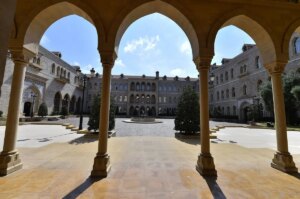
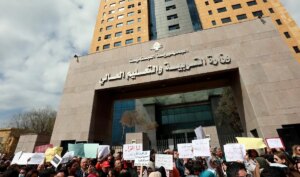
The human rights and popular debate regarding the recovery of deposits and compensation in Lebanon moved from field movements in front of the Palace of Justice to the stage of judicial organization and planning, during a massive meeting held on the afternoon of Wednesday, September 30, 2026, at the “Smallville” Hotel in the Museum District in Beirut.
The meeting, which was organized by human rights organizations and activists under the title “Liberating deposits and rights with the force of law” and the slogan “United against injustice – Your support is with us,” came as a continuation of the protest carried out by the “Depositors’ Union” in front of the Palace of Justice, with the aim of discussing a practical plan ready for implementation that integrates the efforts of depositors, military and civilian retirees, and all others affected by the financial and monetary crisis and the collapse of the lira.
In a speech on behalf of the depositors, retired Brigadier General of the Lebanese Army, Sami Al-Rammah, stressed the necessity of unifying ranks among the various affected groups, considering that dispersion weakens rights holders while organization and solidarity give them greater strength. Al-Rammah pointed out that military retirees are also suffering from the repercussions of the crisis as a result of the decline in the value of salaries and compensation and the inability to secure medical care and medicines, calling for moving beyond sporadic movements towards broader coordination to reform the financial and social system.
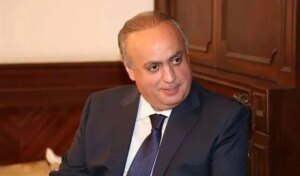
The meeting witnessed practical interventions and discussions initiated by lawyer Wahib Murad, which focused on the mechanisms for filing lawsuits, organizing agencies, calculating lawyers’ fees, and the possibility of filing coordinated lawsuits bringing together several people. The attendees agreed that each applicant would submit his file in his name and legal capacity, with collective coordination between similar files to separate personal rights and solidarity work. The meeting also discussed the time limits, the required documents, and the steps that must be taken with the banks before resorting to the judiciary, in addition to taking into account the urgent cases of those who need urgent liquidity.
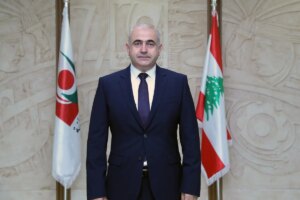
For his part, lawyer Rami Alliq reviewed the details of the proposed path based on justice, solidarity, documentation, organization, and seeking help from the media when needed. He explained that the plan is not limited to raising slogans, but rather adopts a “scientific and planned” path linking the issue of deposits with the decline in compensation for civilian and military retirees, stressing that the “United” initiative is open to all rights holders, both Lebanese and non-Lebanese, without discrimination.
Aliq explained that the judicial path begins with establishing rights through lawsuits and executive procedures, and using legal means such as precautionary and executive sanctions when its conditions are met, citing previous experiences he followed, including a file related to “Fransabank” that proved the possibility of recovering the deposit with its full benefits. He pointed out that the proposal adopts “coordinated individual lawsuits” and not collective lawsuits in the absolute sense, so that each applicant maintains his legal status while sharing the regulatory and financial burdens.
Regarding litigation costs, Aleeq pointed out the adoption of a solidarity model that allows those who are able to support those who are unable, while ensuring complete transparency, documenting payments, and informing file holders of developments in their cases. This movement comes in light of the continuing repercussions of the monetary crisis on the purchasing power of the Lebanese, to establish legal and regulatory frameworks whose effectiveness remains governed by the specificity of each file and its judicial process.