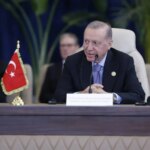
In light of an unprecedented escalation in tension between Ankara and Tel Aviv, Turkish President Recep Tayyip Erdogan sent a direct message to the Israeli street, stressing that Turkey has no hostility towards the Israeli people, and indicating that attempts to portray his country as a security threat are linked to internal political calculations and the electoral atmosphere in Israel.
Erdogan’s statements were quoted from a report prepared by journalist Eli Leon in the Israeli newspaper “Maariv”, based on what was published by “Newsweek” magazine, as part of a report that dealt with the escalation of tension between the two main allies of the United States and fears of the confrontation moving from political discourse to military action. “Recently, a false narrative is being fed in Israel that aims to present Turkey as a new source of threat,” the report quoted Erdogan as saying, adding that this rhetoric is linked to internal political dynamics, the electoral atmosphere, and the use of Türkiye in security messaging for campaigns.
The Turkish President stressed that his sharp criticism is directed exclusively at the Israeli government and not at the public, saying: “Turkey does not bear any hostility towards the people of Israel or towards any other society,” and considering that what Ankara opposes are “policies that conflict with international law, and steps that deepen the state of instability in our region.”
This debate comes against the backdrop of weeks of mutual tension, which began with friction over the Syrian file following an Israeli raid last month that targeted an air base in northern Syria following the visit of a Turkish military delegation. Israel considered that any Turkish military concentration in Syria would change the balance of power and restrict the freedom of action of its air force, while Ankara accused Tel Aviv of violating Syrian sovereignty.
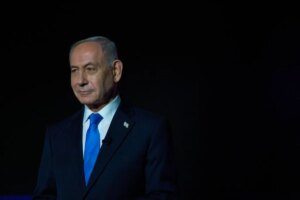
The escalation moved to the political arena, where the office of Israeli Prime Minister Benjamin Netanyahu described President Erdogan as an “anti-Semitic dictator” and accused him of trying to intimidate the Israeli leadership. The Turkish presidency responded by describing these positions as “cheap political tactics” aimed at portraying Türkiye as a threat in the context of the electoral competition. This was exacerbated after Erdogan’s picture appeared on Israeli election banners alongside Mojtaba Khamenei, Zahran Mamdani, and Naeem Qassem, under the slogan: “They want Netanyahu to lose, do not allow them to win.”
The debate continued with the attention of Israeli Defense Minister Yisrael Katz, who attacked Erdogan against the backdrop of his speech before the United Nations General Assembly, describing him as a “paper sultan” and accusing him of supporting Hamas and seeking to revive the Ottoman Empire. In his speech, Erdogan strongly criticized Israeli policy in Gaza, calling for increased international pressure on it, which Ankara defended in its sharp response to Katz’s statements, stressing that criticism does not change its position on the war in Gaza.
Despite the intensity of the verbal war, the Syrian front is the most sensitive and worrying area between the two sides. According to Newsweek, experts in Türkiye and Israel believe that a direct military confrontation is not the most likely scenario, but they warn that increased friction raises the risk of miscalculation.
In this context, the report quoted Turkish expert Ismail Numan Telji as saying that the outbreak of a limited confrontation cannot be completely ruled out, especially if Israel tries to test the extent of Turkey’s determination near the bases where Ankara is active. Thus, Erdogan’s message combines the separation between the dispute with the Israeli government and the relationship with its audience, and a warning against exploiting Turkey electorally, while the danger of field friction in Syria remains the most prominent challenge capable of escalating the crisis to more dangerous levels.