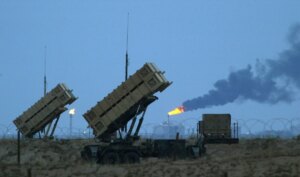
A recent report by the US Congressional Budget Office revealed that the direct cost of military operations against Iran amounted to about $38.1 billion as of early August. The report indicated that the dimensions of the confrontation went beyond the financial framework to affect the depletion of the strategic military stock, which requires replacing some of its categories – especially interceptor missiles and air defense systems – for several years, which raises concerns within Washington about military readiness to confront other potential crises, especially in the Indo-Pacific region.
The report indicated that direct expenses included increasing flying hours, increasing fuel consumption, and covering lost equipment, while the compensation item for advanced missiles and ammunition accounted for the largest share at a cost estimated at $21.7 billion. The budget office confirmed that the bill is likely to continue at billions of dollars per month if operations continue at the same pace, indicating that the repercussions extend to the American economy as a whole through inflationary pressures resulting from the disruption of energy supplies and the decline in the movement of oil and gas through the Strait of Hormuz.
On the other hand, US President Donald Trump downplayed concerns related to the lack of military arsenal, stressing that the United States possesses large quantities of ammunition, which was supported by the Pentagon by refusing to describe the situation as a “shortage of stock.” This comes in conjunction with Trump’s request for additional funding worth billions of dollars to support ongoing operations and replace consumed supplies.
Politically, the report was prepared at the request of two Democratic legislators, Representative Brendan Boyle and Senator Elizabeth Warren, who directed sharp criticism of the Trump administration. Boyle considered that the administration was saving tens of billions for the war while hesitating to fund internal needs, while Warren warned that continuing this confrontation would harm military readiness and drain citizens’ money.
These data come to intensify the debate within Congress about the president’s exceptional powers and the cost of the confrontation that began in early 2026, especially with the approaching midterm elections scheduled for next November, and the war file has turned into a pivotal issue in the political and economic debate inside the country.