Radwan Aqeel – “An-Nahar”
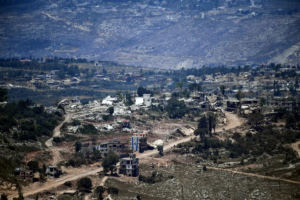
The political facts at the level of negotiations with Israel and diplomatic contacts, especially with American officials, do not show that there will be any breakthroughs in southern Lebanon with the escalation of Israeli attacks and its seizure of Ali al-Taher Hill in Nabatieh, after the military and political material became the first in the Arab media and was highlighted more as the date of the Knesset elections approached.
Aside from those who support the path of direct negotiations with Israel and those who oppose it, there are constants that the parties have reached, which is that Israel will not easily withdraw its army from the areas of towns it occupied, especially the border ones from the south of the Litani to its north. At the moment of scrutiny regarding what the Israeli plan is presenting, a Lebanese authority comes out to say that after Tel Aviv was able to seize Ali Al-Taher Hill, even with “fiery control,” which prevents “Hezbollah” from using its hills, interiors, and tunnels to threaten Israeli units. He believes that the Israeli project this time is to work to divide the south into areas that are not “experimental” according to the concept of the “Framework Agreement”, but rather to move towards taking three steps, starting with the establishment of buffer zones and stripping them of all weapons in the second stage after expelling all their residents, provided that this process culminates in the establishment of an Israeli government that will remain in the hands of the extreme right, whether Benjamin Netanyahu remains at its head or if a successor is brought in, to sponsor what the extremists will do after military and security control of the land. The south, especially from the border towns, from establishing settlements and bringing in settlers from Israel and abroad.
It was not a coincidence that extremist Jewish associations visited more than one town and are working from today to replace the names of towns in the south with Hebrew names. A good number of rabbis and politicians, including a good number of active party activists who are candidates for the Knesset elections, if they arrive, are working to launch projects of this kind, even though the Likud Party led by Netanyahu does not address this point, at least in the media, other than focusing on disarming Hezbollah and eradicating all of its military machinery. Today, it is evading negotiations that it did not originally want and is working to postpone their rounds until after the Knesset elections.
Following up on the preparations for the upcoming eighth round in Rome, the Lebanese negotiating team only received information that it was likely to be held on the 14th and 15th of this month.
Meanwhile, in the opinion of this authority, there are a number of signals that might push Israel to build settlements in the south, something that it did not implement on the ground from the first invasion until the liberation of the south in May 2000. If it does not take such a step, it will establish a security belt starting from Naqoura along the border to the outskirts of the occupied Shebaa Farms, which would originally be devoid of any Lebanese presence while leaving freedom of movement to the Israelis in order to target any cadre. A soldier in Hezbollah, at least in the south, until the fate of the party’s weapons is decided.
It was not surprising that Israel rejected the extension of UNIFIL, whose mandate expires at the end of this year, with the support of America, which did not support the approach of the Secretary-General of the United Nations, Antonio Guterres, to maintain the international force. Hence, Israel practices a policy of rejecting the presence of an international force in the south in order not to be a witness to its practices, least of all in terms of the borders, which so far show that the map of an area of 10,452 square kilometers will not remain as it is.