October 23, 2026

The following is the wording of the news in a professional journalistic style, while preserving all the facts and names mentioned in the original text:
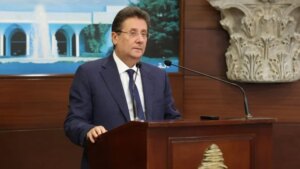
Geagea via “The Time Has Come”: The army is capable if there is political will, and remaining in the government is a bitter option due to the absence of an alternative.
The head of the “Lebanese Forces” party, Samir Geagea, confirmed that the Lebanese army is capable of dealing with complex security and political issues, stipulating the presence of the political will for that, saying: “The army is in it to deal with such matters, but you want it to be a Bedouin.”
Regarding the army commander, Geagea indicated that he is “in another direction regarding our policy orientations,” expressing at the same time his confidence in him if he receives orders “as he should,” and described him by saying: “The man is a human being and he executes.” Despite this emphasis on the ability of the military institution, fundamental questions arise about the nature of these orders, the party responsible for drawing up the plan, and how the state will act if Hezbollah refuses, as relying on the will and describing the military commander as honest is not a substitute for a clear disarmament plan, the exclusivity of which Geagea considered requires “a clear political intention to dismantle Hezbollah,” which “does not exist at the present time.”
Regarding his vision of the working mechanism in the event that he reaches the presidency of the republic, Geagea explained that the first step would be to summon Hezbollah officials and inform them that “the game is over,” and that “what remains of us,” stressing that “the state will act” if they do not respond, without providing additional details about the nature of this behavior or the cover and plans associated with it.
Regarding the local political issue, Geagea touched on his relationship with the President of the Republic and the Prime Minister, considering that the “Forces” Party is with them “in the same boat until further notice,” but he conditioned this support on the extent to which President Aoun adopted the “Forces’” proposals, saying: “To the extent that President Aoun adopts all of the Forces’ proposals, we will stand by his side.”
Regarding government participation, Geagea announced that leaving the government was “out of the question,” attributing this to the absence of an alternative and not the party’s satisfaction with the performance. He asked: “Should we leave the government and form a government with Hezbollah and the Amal Movement?” adding: “We are not very happy about our presence in the government,” in an equation that combines criticism and remaining as the least politically harmful.
In another context, Geagea contented himself with hinting without calling things by their names when he said, “I am morally fed up with such and such a thing,” indicating that there are considerations in the political scene that prevent him from telling things as they really are, an approach that leaves pending accusations without clarification or discussion.
The report concluded by noting that between an army that requires will, a state that “will act,” a conditional partnership, and government survival imposed by the absence of an alternative, executive details remain absent behind decisive rhetoric, while the Lebanese wait for clear answers about the decisions, plans, and entities responsible for the results.