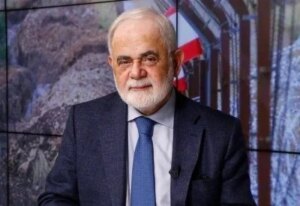
Secretary-General of the Future Movement, Ahmed Hariri, called on the Lebanese state to pursue those responsible for the bombings of the Al-Salam and Al-Taqwa mosques in Tripoli and to arrest those wanted linked to the services of the former Syrian regime, considering that the fall of Bashar Al-Assad’s regime does not nullify the rights of the Lebanese victims nor end the process of accountability.
Hariri wrote on the “X” platform, on the anniversary of the bombings of the two mosques: “We are recalling a heinous crime committed by the defunct Assad regime, which wanted to terrorize Tripoli and all of Lebanon,” stressing that the city has the right to see justice take its course years after the crime.
He called on the Lebanese state to arrest those wanted in files related to the crime and to the services of the former Syrian regime, and specifically mentioned Major General Ali Mamlouk, along with officers who he said were “hiding” inside Lebanese territory, based on recent statements by former Progressive Socialist Party head Walid Jumblatt regarding the presence of a number of senior officers of the Assad regime in Lebanon and their enjoyment, according to what Jumblatt said, of “semi-official protection.”
Hariri said that “official Lebanon is called upon to keep pace with the path of transitional justice that began with President Ahmed al-Sharaa in Syria,” considering that justice “does not stop at the borders of geography,” and that the fall of the former Syrian regime does not mean the fall of the rights of its victims in Lebanon and Syria.
He added that the blood of the martyrs of the Mosques of Peace and Piety, along with the victims of the crimes he attributes to the former Syrian regime in Lebanon, must form part of the process of accountability, concluding by saying: “May God have mercy on the martyrs of Peace and Piety, and all the martyrs of Tripoli and Lebanon.”
The crime of the Al-Salam and Al-Taqwa mosques dates back to August 23, 2013, when two car bombs exploded minutes apart in front of the two mosques after Friday prayers, killing dozens of people and wounding hundreds, in one of the bloodiest attacks that Tripoli witnessed during that period.
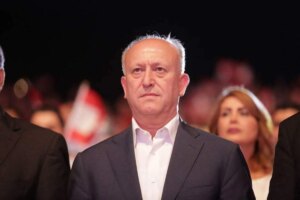
In 2016, the judicial investigator, Judge Alaa Al-Khatib, issued a 44-page indictment in which he named Syrian intelligence officers, including Captain Muhammad Ali Ali and Political Security official Nasser Ahmed Jouban, in addition to Khader Al-Airouni, and accused them of planning, inciting, and providing assistance to carry out the two bombings. He also wrote investigation notes to determine the identity of the highest-ranking officials who gave the orders and directives.
The decision indicated that investigations concluded that the orders were issued, according to the judicial file, by a “high-level security system” in Syrian intelligence, and that the implementation process took place through a network that included people in Lebanon who transported the two car bombs, placed them near the two mosques, and detonated them.
As for the name of Ali Mamlouk, it was mentioned in the investigation data related to extensive communications between one of the defendants and officials in his office, but the indictment in the two mosque bombings directly named other officers. At the same time, Mamlouk was being prosecuted before the Lebanese judiciary in a separate file related to the case of former Minister Michel Samaha and a plan to transport explosives from Syria to Lebanon in 2012, and an arrest warrant was issued against him in absentia in that file.
The renewed demand for accountability comes at a stage in which the Syrian scene has changed radically after the fall of Bashar al-Assad’s regime in December 2024, the arrival of Ahmed al-Sharaa to the presidency, and the new authorities starting a path of transitional justice and pursuing a number of symbols of the previous era.
In 2025, the Syrian authorities established two bodies for transitional justice and for missing persons, in a step aimed, in accordance with their declared tasks, at documenting violations, revealing the fate of missing persons, determining responsibilities, and supporting the process of accountability and reparation.
Al-Sharaa confirmed in later statements that the Syrian state is working to try symbols of the former regime within the framework of the law, in parallel with addressing the file of missing persons, while the Transitional Justice Authority has begun working on files related to serious violations and cases being considered by the Syrian judiciary.
Hariri’s position once again opens the file of crimes committed in Lebanon during the years of the Syrian crisis, amid a demand that the transformations witnessed by Damascus include files that remained pending before the Lebanese judiciary, most notably the crime of the Peace and Piety Mosques.
Thirteen years after the two bombings, Hariri re-presents the issue from a new angle: The regime that was politically and judicially accused of being behind episodes of crime fell, but the wanted persons and the judicial files did not fall with it, which makes the question today linked to the ability of Beirut and Damascus to transform the phase of “transitional justice” into actual judicial cooperation that guarantees the rights of the victims.