“RED TV”
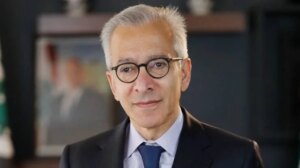
Vice President of the Lebanese Association for Taxpayers’ Rights, Mr. Nadim Daher, warned of the continuing decline in the purchasing power of Lebanese families, considering that the high cost of basic services, in exchange for stable incomes and a decline in the level of service, is forcing citizens to bear additional burdens that in some cases amount to paying the cost of the same service more than once, while many families are forced to sacrifice basic needs such as food and medicine.
In an interview on the “3:15 Economy” program on RED TV, Daher stressed the necessity of distinguishing between the overall increase in the percentage and the relative increase, explaining that family income did not increase, while prices increased significantly, which was directly reflected in the purchasing power of the citizen and made him feel more acutely the increase in the cost of services.
He pointed out that the citizen often pays the cost of the service twice, pointing out that, for example, he pays the Lebanese electricity bill, and then at the same time bears an additional cost related to maintenance or alternative sources of energy, an equation that is also repeated in other services.
Daher considered that there is an almost absence of the state in this field, as the state receives revenues and fees, while the services provided remain incomplete, and the quality is not available as required, at a time when the cost is rising as a result of corruption, mismanagement, and weak collection.
Regarding the electricity file, he pointed out that the citizen pays a high subscription fee even during periods when he does not use electricity or does not receive the service, considering that this equation increases the financial burden without being matched by an actual improvement in the quality of service.
He believed that the collapse of the exchange rate and the support policy that was followed during the past years contributed to the accumulation of problems instead of addressing them, as the citizen paid a subsidized price instead of a controlled and sustainable cost, which led to an exacerbation of burdens and an accumulation of financial problems, leading to a broader crisis at the state level.
He added that the infrastructure in Lebanon is old and does not provide the required level of service, in parallel with the rise in costs and the increase in consumption, which makes the citizen feel more about the rise in the prices of services without seeing a corresponding improvement in their level.
Daher pointed out that the citizen is unable to do without many of these services, while his income remains limited, while the conditions of a large segment of the middle class have declined until they are at the borders of the poverty line, which has prompted families to sacrifice basic needs, including food and medicine, to cover the expenses of other services.
Regarding private generators, he pointed out that their owners operate as private entities that naturally seek to achieve profit, while a large number of them operate without a clear legal framework or integrated legislation regulating this sector.
At the institutional level, Daher explained that the private sector sometimes dispenses with Lebanon’s electricity because the cost of obtaining it becomes higher than the cost of producing electricity on its own, considering that this reality is not the path to be reached.
He particularly emphasized the repercussions of this cost on the industrial sector, explaining that industrialists face a high cost of electricity, which weakens their ability to compete in foreign markets and raises the cost of production compared to competitors.
In the telecommunications file, Daher pointed out the existence of a monopoly in the fixed telephone sector on the part of “Ogero,” pointing out that the entry of “Starlink” into the Lebanese market may impose a major shift in the Internet sector.
He explained that if “Starlink” begins operating in Lebanon, existing Internet companies may face the risk of closure, as a result of the low cost of the service they provide compared to the cost borne by local companies, especially in light of the monopoly and fees that these companies pay to “Ogero.”
According to Daher, the essence of the crisis is no longer linked only to rising prices, but rather to the growing gap between what the citizen pays and what he actually receives in terms of services, a gap that is now putting direct pressure on the family, the private sector and industry, and turning the cost of basic services into one of the most prominent aspects of the living crisis in Lebanon.