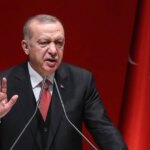
The competition over Somalia is no longer limited to political or military influence, but rather extends to ports, airports, natural resources, security and space, at a time when a Somali opposition MP is directing unprecedented accusations against Ankara, considering that Turkish President Recep Tayyip Erdogan is doing in his country “whatever he wants,” and that Turkey is practically seeking to control the state, in parallel with the region becoming an arena of increasing competition between Israel and Turkey over influence in the Red Sea.
According to a report by journalist Tomer Almog on the Israeli “N12” website, over the past two years, Turkey has deepened its influence in Somalia and expanded its presence in a large number of sectors and fields within the country, while Somali parliament member Abdullah Hashi Abib said that Ankara “wants to control Somalia.”
Experts who spoke to the site believe that Somalia has great strategic importance, and for Türkiye it represents a key station in its ambitions to transform into a middle power with a broader regional and international presence.
At the same time, Israel has increasingly entered this arena over the past year, especially after its recognition of Somaliland, in parallel with the escalation of tension between it and Türkiye.
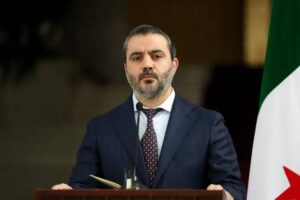
Abeeb told “N12”: “Erdogan does whatever he wants in Somalia.” The Turks are plundering Somalia,” in an attack that the report described as exceptional on the scale of the growing Turkish interference in the African country.
In recent years, Abeeb has become one of the most prominent faces of Somali opposition to the growing Turkish influence, considering that Ankara is not content with a political presence, but rather extends its influence to the basic sectors of the country as part of a broader path to strengthen its power and transform itself into a middle power.
The opposition MP said: “They have controlled our entire fishing sector, they control the seaports and the airport, they train our security personnel, they control the maritime domain, they deploy their satellites here, and they are trying to establish an additional base in Somalia. We are in a strategic location, and they want to control Somalia.”
For her part, Sheri Fine-Grossman, Director General of the Institute for Israel-Africa Relations, said that Abeeb does not represent a single voice inside Somalia, noting that there is a movement that opposes the Turkish presence and the agreements that give Ankara control over a large number of natural resources in the country.
She added that Abeeb is considered a “prominent and serious voice” in the face of Turkish interference, and that the movement he represents has become one of the harshest critics of Turkish influence, based on its belief that this presence does not achieve the results that were promised to the Somalis.
In turn, Omar Mahmoud, an expert on Somalia and the Horn of Africa at the International Crisis Group (ICG), explained that Turkey began a broad intervention in Somalia in 2011, when it provided humanitarian aid to the country against the backdrop of the severe famine that struck it at the time.
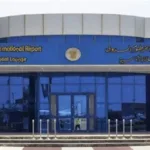
Mahmoud told “N12”: “After a short period, Turkey obtained contracts to manage the port and airport in Mogadishu, and then later participated in rebuilding the Somali army, and these are forms of cooperation that still continue today.”
He added that Türkiye chose to invest in Somalia despite the risks because it saw strategic potential and opportunities in it.
He pointed out that the last two years witnessed “a further deepening of Turkish intervention in Somalia,” after Mogadishu turned to its allies in an attempt to stop the path of Somaliland’s independence, which allowed Turkey to gain an important foothold in the oil and fishing sectors, in addition to approving projects in the fields of security and space.
Mahmoud said, “Somalia is important for Turkey’s broader ambitions to transform into a middle power, and perhaps more than that,” considering that it may constitute a “launching platform” for Ankara to deepen its intervention in various parts of the African continent and in the Indian Ocean region.
In a parallel context, Abeeb claimed that he had previously been offered money to help pass various Turkish demands, but he rejected it.
He claimed that a large number of members of parliament receive bribes from Türkiye, and therefore, according to him, there is no real possibility of passing legislation that would reduce Ankara’s interference in the country.
On the other hand, Mahmoud stressed that corruption constitutes a “huge problem” in Somalia, but he said that he did not know specifically about the allegations made by Abeeb in this regard.
According to the report, Somalia has also turned into an arena for an influence confrontation between Israel and Turkey, in light of unprecedented tension between them in recent months.
The Israeli recognition of Somaliland, which aspires to gain sovereignty within Somali territory, angered the government in Mogadishu, while this move gave Israel a focal point in a very strategically sensitive region, close to the Red Sea and the Houthis in Yemen.
“Israel and Turkey are competing for presence in the Red Sea,” Fine-Grossman said, stressing the strategic importance of the entire region.
According to a CNN report, Israel deployed forces in the African country during the confrontation with Iran.
As for Abeeb, who strongly opposed Israeli recognition of Somaliland, he said that he is trying to persuade the American administration and Somali public opinion to take action against Turkish intervention, expressing his hope that Israel will do so as well.
He said that his mere call for cooperation with Israel “reflects the extent of our hatred for Turkey and what it is doing to us.”
Thus, the battle over Somalia goes beyond the boundaries of bilateral relations between Mogadishu and Ankara, gradually turning into a broader conflict over ports, wealth, military influence, and the Red Sea, at a time when internal Somali criticism reveals that Turkey’s expansion no longer passes without political resistance from within the country itself.